Most families have a default check-in question, and it's usually some version of "where are you?" It's a fair question — and a useful one. But if it's the only question, it can quietly train everyone to answer with a location pin and nothing else. Over time, "checking in" starts to feel like being tracked rather than being known.
The good news is that a few small shifts in how your family checks in can turn a one-line status update into an actual conversation — without adding more pressure to anyone's day. Here's how to build check-ins that your kids (and honestly, you too) might actually look forward to answering.
Why "Where Are You?" Only Tells Half the Story
Location answers a logistics question: are you safe, are you on schedule, are you where you said you'd be. Those things matter. But they don't tell you how your kid's day actually went, whether something is bothering them, or whether they'd welcome a few extra minutes of your attention tonight.
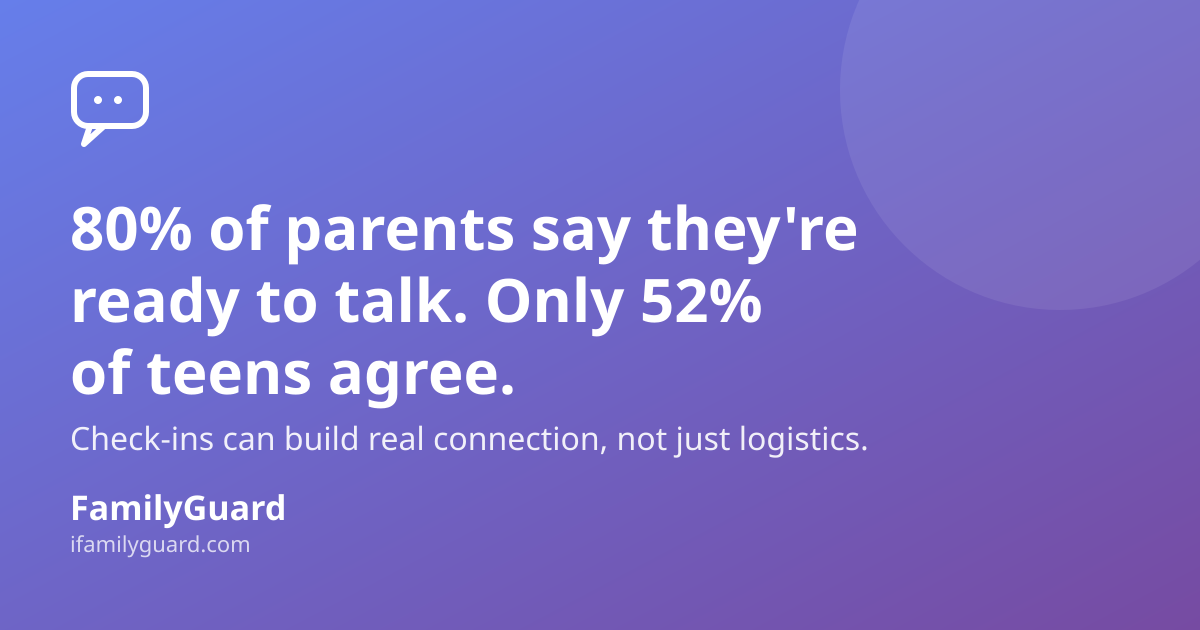
There's a real gap here worth noticing. A 2025 Pew Research Center survey found that 80% of parents say they're extremely or very comfortable talking with their teen about their teen's mental health — but only 52% of teens say the same about talking with their parents. That's a meaningful comfort gap, and it suggests many families are talking at each other about logistics more often than they're talking with each other about how things actually feel. (Pew Research Center, 2025)
None of this means location sharing is a problem. It's simply a different tool, solving a different problem than connection does.
A Few Check-In Habits That Build Real Connection
You don't need a new app, a family meeting, or a big speech to shift the pattern. Small, repeatable habits tend to stick better than one big overhaul. A few that many families find easy to adopt:
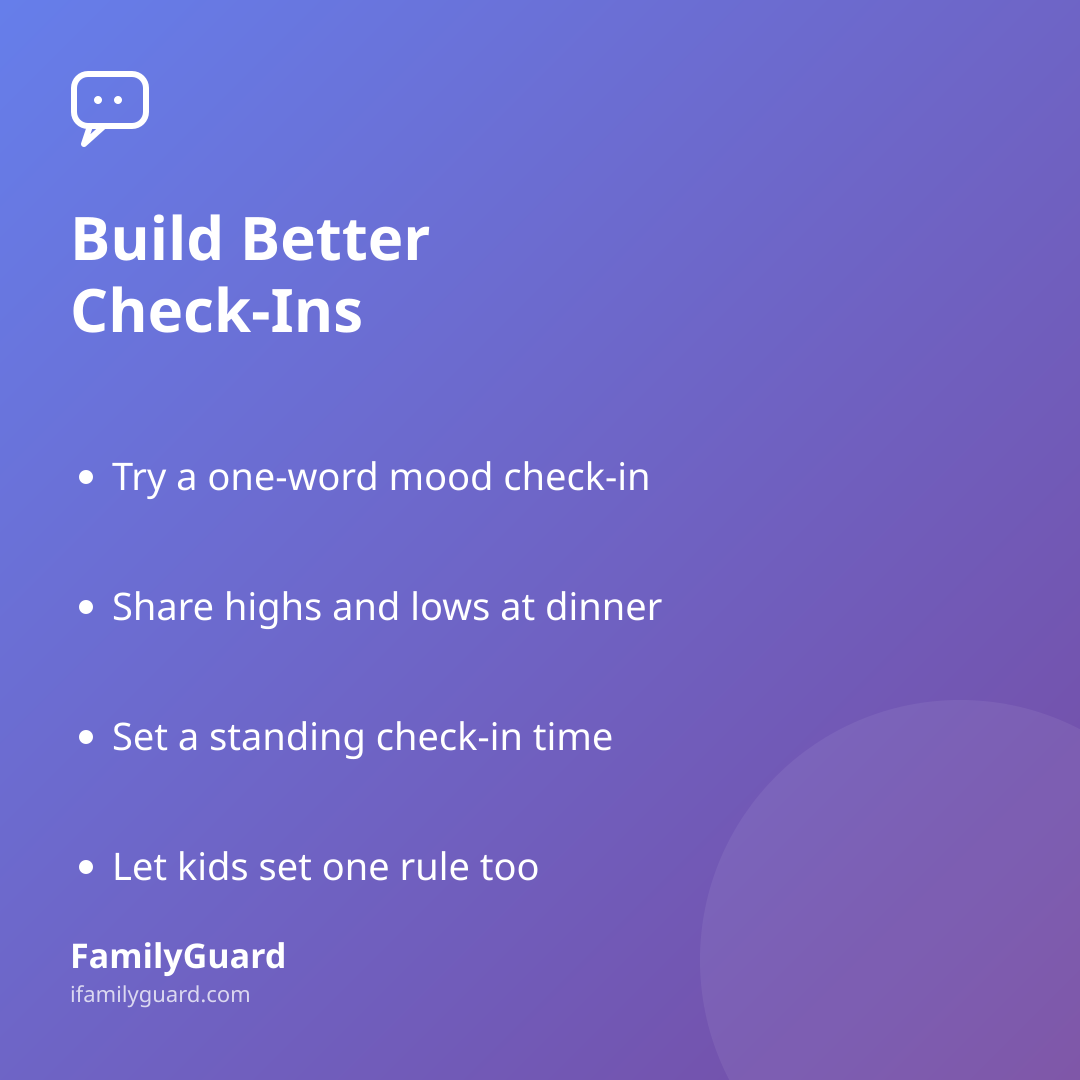
- The one-word mood check. Instead of "how was your day," try "give me one word for today." It's quick enough that even a tired teenager will answer, and it opens the door if they want to say more.
- Highs and lows at dinner (or in the car). Everyone shares one good thing and one hard thing from their day. Kids tend to open up more easily when it's a shared ritual rather than a one-sided question aimed only at them.
- A standing, low-pressure time slot. Some families do a two-minute check-in before bed; others do it on the walk from the car to the house. A predictable moment removes the awkwardness of figuring out when to bring something up.
- Let kids set one check-in rule too. Ask what they'd want to know about your day. Reciprocity makes check-ins feel like a two-way relationship instead of a one-way report.
- Separate "logistics" messages from "connection" messages. A quick "running 10 min late" text doesn't need to double as your only conversation of the day. Naming the difference out loud — even just once — helps everyone stop treating a location update as the whole check-in.
Matching Check-Ins to Age and Independence
What counts as a good check-in changes a lot as kids grow up, and it's worth revisiting the pattern every year or so rather than assuming what worked at age 8 still works at 14.
For younger children, check-ins can be more frequent and more concrete: a quick call after school, a specific question about recess or lunch. Young kids often need a little help turning "fine" into something more detailed, so specific prompts ("who did you sit with at lunch?") tend to work better than open-ended ones.
For tweens and teens, frequency usually matters less than quality. A teenager who gets one genuinely curious question a day will often respond better than one who gets five quick "you good?" texts. Teens are also more likely to initiate a real conversation when they don't feel like every check-in doubles as a status report to be filed away.
Where Location Sharing Still Fits
None of this is an argument against location sharing — it's an argument for not asking it to do a job it was never meant to do. Knowing your family is safe and roughly where they expect to be is genuinely reassuring, and it frees up conversations so they're not always about logistics. Apps like FamilyGuard are built around this idea: location sharing, SOS, and family chat all live within a consent-based family circle that everyone agreed to join, so the "where are you" question is handled quietly in the background, leaving actual conversation for actual conversations.
Used this way, a family chat becomes less of a surveillance tool and more of a shared space — somewhere to send a silly photo, celebrate a good grade, or say goodnight, not just to report a location.
Why This Is Worth the Effort
Feeling connected to family isn't just pleasant — it's protective. The Centers for Disease Control and Prevention notes that building strong bonds and relationships with adults at home gives young people a sense of connectedness that can help protect them from poor mental health and other risks as they grow. (CDC, 2024)
A location ping can tell you someone made it home safely. A real check-in can tell you how they're actually doing once they're there.
You don't need to overhaul your family's communication overnight. Pick one small habit — a one-word mood check, a dinner-table ritual, a reciprocal question — and give it a few weeks. The goal isn't a perfect system. It's making sure that somewhere underneath all the logistics, your family still has room to actually talk.