
There's a particular kind of chaos that comes with a big family gathering: cousins you haven't seen all year, grandparents holding court in the kitchen, kids weaving between adults' legs, and someone always asking "wait, where did the little ones go?" It's one of the best parts of being a family — and it's also the moment when it's easiest to lose track of who's where, even for a few minutes.
None of this requires a complicated system. A few minutes of planning before everyone arrives can turn "has anyone seen Max?" into a non-event, and it lets the grown-ups actually enjoy the gathering instead of doing a headcount every ten minutes.
Before Everyone Arrives: A Few Minutes of Planning
The best time to make a plan is before the house fills up or the reunion grounds get crowded, not after someone has already wandered off. A short conversation with the kids — and maybe a quick word with the other parents in the family — goes a long way.
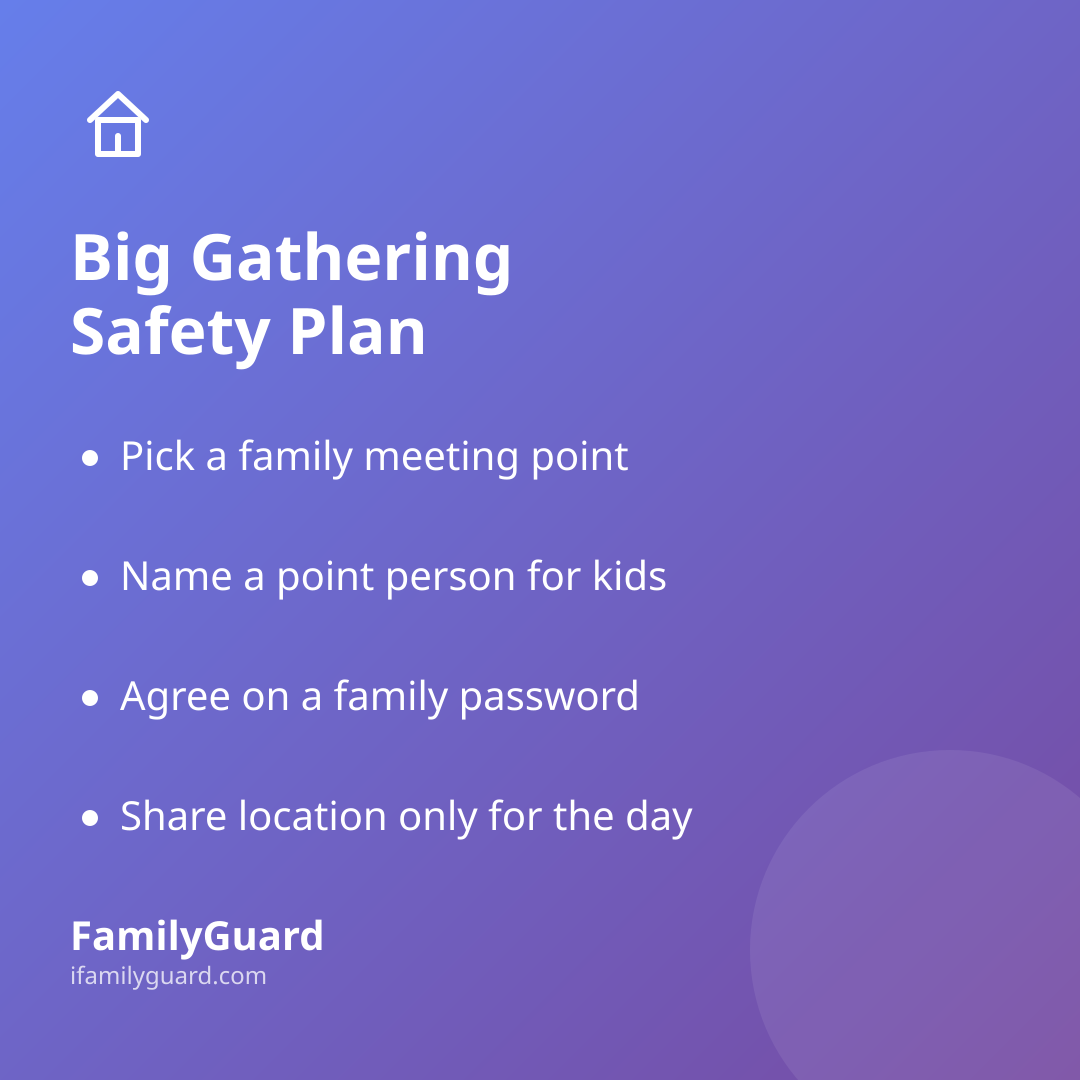
- Pick a meeting point. One spot everyone knows: "if we get separated, come back to the porch" or "meet by the big oak tree near the picnic tables."
- Name a point person. At a large event, one adult (not necessarily you) who kids can find if they need help and can't locate a parent right away.
- Agree on a family password. A word or phrase only your family knows, so kids learn to only go with an adult who can say it — advice that comes straight from the American Academy of Pediatrics (2022), which recommends a family password alongside a designated meeting place.
- Walk the space together. A quick lap of the house, yard, or venue so younger kids can see the meeting point with their own eyes rather than just hearing about it.
Young Kids: The Basics That Matter Most
For younger children, the goal isn't to make them anxious about a big, happy day — it's to give them a few simple tools they can use if they ever feel lost in a crowd of unfamiliar faces (even if those faces are relatives).
The AAP's reunification guidance suggests practical, low-key steps: make sure a young child knows their own full name and a parent's phone number, keep a recent photo of your child on your phone, and for especially crowded events, write a phone number somewhere on their person — a wristband, a note tucked in a pocket, or even in washable marker on their arm. None of this needs to be said in a worried tone; it can be framed the same way you'd explain where the bathroom is.
A simple buddy system helps too — pairing a younger cousin with an older one, or asking one teen to keep a loose eye on a sibling during the day, works well as long as expectations are clear and nobody feels like they're "on duty" the whole time.
Tweens and Teens: Freedom With a Rhythm
Older kids and teens usually want to break off with cousins and explore on their own terms, and that's a healthy, normal part of a family gathering — not something to clamp down on. The goal is to give them room to roam while keeping a light, agreed-upon rhythm for staying in touch.
A quick check-in every hour or two, a shared understanding of where the group is allowed to wander, and a simple way to reach each other if plans change is usually all it takes. If your family already uses an app like FamilyGuard for everyday check-ins, the same habit travels well to reunions and holidays — it's just a temporary extension of something kids already know and have agreed to, not a new layer of oversight sprung on them for the occasion.
Sharing Location, the Family Way
Big gatherings often mean relatives who don't normally share location with each other being in the same place for a day or a weekend — grandparents, aunts, uncles, cousins' families. It's worth being clear with kids (and with the adults) that any sharing is temporary and specific to the event, not a permanent change to how things work at home.
A few ways families make this easy and consent-based:
- Turn on sharing just for the day of travel or the gathering itself, and turn it back off afterward if that's what your family prefers.
- Set a smart zone or alert for the venue or relative's house, so the family knows when someone in the group has arrived — handy when a big group is traveling in separate cars.
- Make sure every teen or older kid understands who can see their location that day, and for how long, before it's turned on.
Keeping the one-tap help option visible on a teen's phone is also worth a mention here — not because anything is likely to go wrong, but because in an unfamiliar venue full of people they may not fully know, it's reassuring for them to know they have an easy way to reach you if something feels off.
Don't Forget the Travel Day
For many families, the gathering itself is only half the plan — getting there is the other half. Holiday travel volumes have been climbing for years: AAA projected that nearly 82 million Americans would travel at least 50 miles from home over the 2025 Thanksgiving holiday period, with close to 90 percent of them driving. That means crowded highways, packed rest stops, and a higher chance of the plan changing mid-trip.
A short conversation before you leave — who's driving with whom, where the planned stops are, and a simple way to say "running late" or "change of plans" — saves a lot of worry later. If your family already has a routine for what to do when someone is late, this is a good day to use it.
A Gathering, Not a Watch List
None of this is about keeping tabs on relatives or treating a joyful day like a security operation. It's a handful of small, shared habits — a meeting point, a password, a quick check-in rhythm — that let everyone, from the littlest cousin to the grandparents, relax into the day knowing that if anyone gets separated for a minute, there's already an easy way back to each other.