On November 1, 2026, clocks fall back an hour — and almost overnight, the walk home from school, the bike ride back from practice, or the wait at the bus stop shifts from daylight into dusk or full dark. It's one of the most predictable changes in the family calendar, yet it still catches most households off guard. The good news: a few small, practical adjustments go a long way toward making that darker commute just as safe as the sunlit one.
Why One Hour Makes a Real Difference
It's not just a feeling — the shift in light genuinely changes road risk. The Governors Highway Safety Association reports that more than three-quarters of pedestrian fatalities occur after dark, out of 7,148 pedestrian deaths recorded in 2024. Separately, researchers at the Insurance Institute for Highway Safety analyzed a decade of crash data and found that in the five weeks after the fall time change, fatal crashes involving pedestrians and bicyclists tend to rise, while crashes involving vehicle occupants tend to fall — a pattern tied to drivers suddenly navigating evening commutes in conditions they weren't adjusted to yet.
None of this means the sidewalk becomes dangerous overnight. It means visibility — for kids and for drivers — matters a little more for a few weeks until everyone's eyes and habits catch up.
What Actually Changes for Your Family's Routine
Think through the ordinary comings and goings that now land in lower light:
- The walk or bike ride home from school, which may now start at dusk instead of midafternoon.
- After-school sports or clubs that let out closer to full darkness.
- Bus stops on streets without much lighting.
- Neighborhood play that used to stretch until dinner but now loses light much earlier.
Walk or drive the usual route once at the new, darker hour. Streets look different without daylight — a crosswalk that felt obvious at 4 p.m. might be much harder for drivers to see at 5.
Visibility Upgrades That Actually Help
None of this requires new gear or a big shopping trip — a few small habits make the biggest difference:
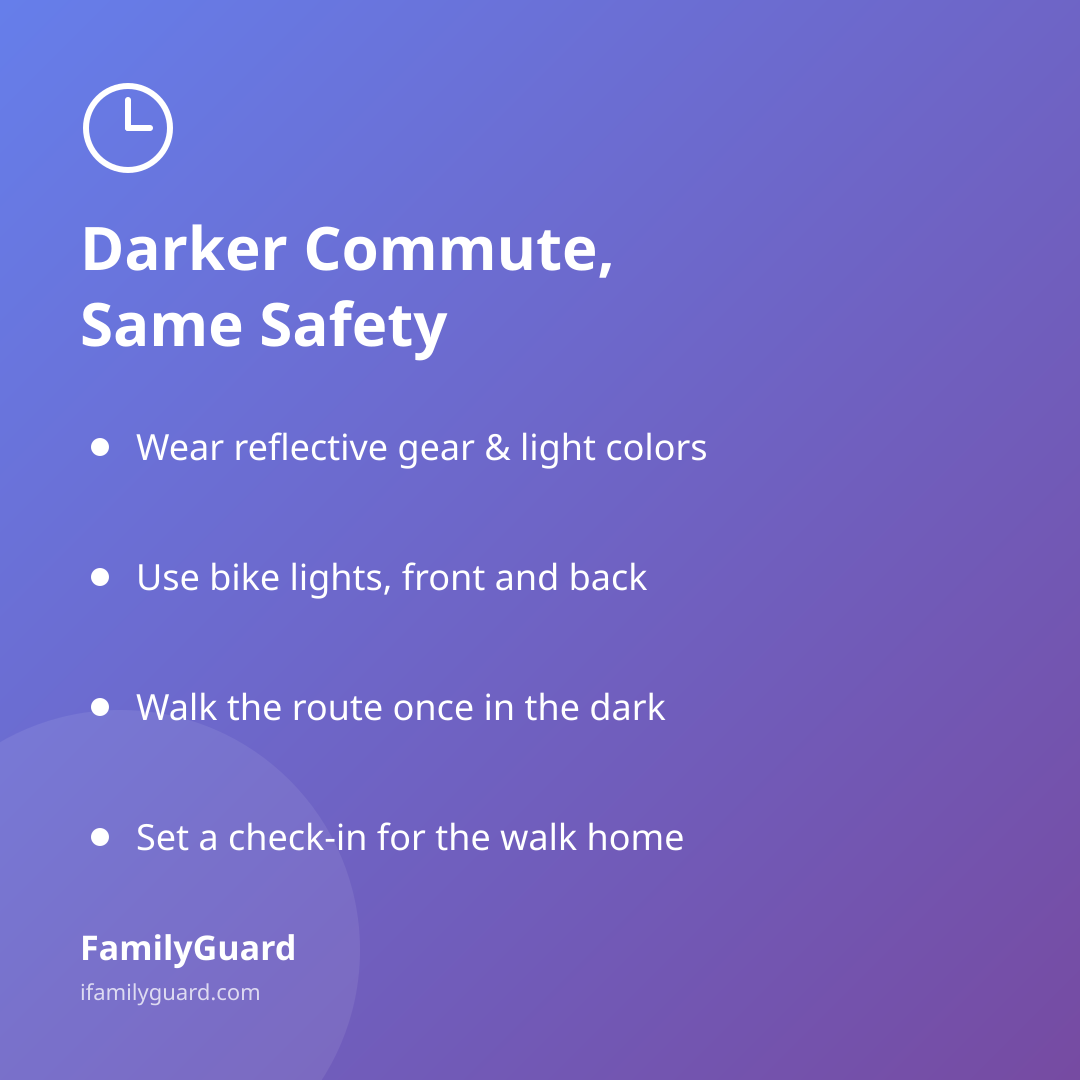
- Add reflective touches — a clip-on reflector, reflective shoelaces, or a strip of tape on a backpack catch headlights well before a driver would otherwise notice a person on foot.
- Light-colored or bright outer layers stand out far better than dark jackets once the sun is down.
- Bike lights front and back, even for short rides — a blinking rear light is cheap and genuinely effective.
- A small flashlight or a phone's flashlight function for the last stretch of a walk.
- Save headphones for daylight — hearing an approaching car matters more when visibility is lower.
- Practice eye contact at crossings — waiting until a driver has clearly seen you before stepping into the street is a habit worth reinforcing at any age.
Adjusting Check-Ins, Not Just Routes
This is also a good moment to revisit timing rather than just equipment. If practice lets out right as it's getting dark, consider whether a slightly earlier pickup, a different route with better lighting, or a buddy to walk with makes sense for a few weeks. Many families find it reassuring to agree on a quick check-in the moment a walk or ride home begins — a text, a call, or a simple "heading home now" message.
If your family already uses location sharing, this is a natural time to lean on it a bit more intentionally. A smart zone alert that lets you know the moment someone has left school or arrived home takes the guesswork out of those darker afternoons, without anyone needing to send a message. In FamilyGuard, that kind of arrival alert is set up once, with everyone's knowledge, and simply runs quietly in the background — it's a convenience for the darker months, not a change in how much trust exists in the family.
A Word for New Drivers in the House
If you have a teen who recently started driving, the fall time change is worth a short conversation of its own. Driving home from practice, a job, or a friend's house now often means doing it in the dark for the first time on a regular basis. A quick reminder to slow down near crosswalks and school zones, give pedestrians extra following distance, and keep windshields clean of glare-causing smudges takes only a minute and genuinely reduces risk during this adjustment period.
Settling Into the New Rhythm
Most families find that within a week or two, the darker afternoons simply become the new normal — eyes adjust, routines shift slightly, and the extra caution becomes second nature rather than something anyone has to think hard about. None of this calls for alarm; it's the kind of small, seasonal tune-up that keeps everyday independence — walking to a friend's house, biking home from practice, waiting for the bus — just as comfortable as it was in daylight.