The first time your child asks to have friends stay overnight, it can feel like a small milestone for them and a long mental checklist for you. Suddenly you're not just responsible for your own kids until bedtime — you're the safety net for someone else's child, too. The good news is that hosting a sleepover well doesn't require an elaborate plan. It just takes a few honest conversations before the night starts, some clear house rules everyone understands, and a simple way to keep in touch with the other parents.
Start With a Few Honest Conversations
Pediatricians have long encouraged parents to treat the "getting to know the house" conversation as a normal, non-awkward part of arranging any playdate or sleepover — not an accusation, just good planning. As the host, you can make this easier by being the one who opens the conversation and answers these questions yourself, unprompted, when a family drops off their child for the first time.
According to the American Academy of Pediatrics (HealthyChildren.org), useful things to cover before any sleepover include:
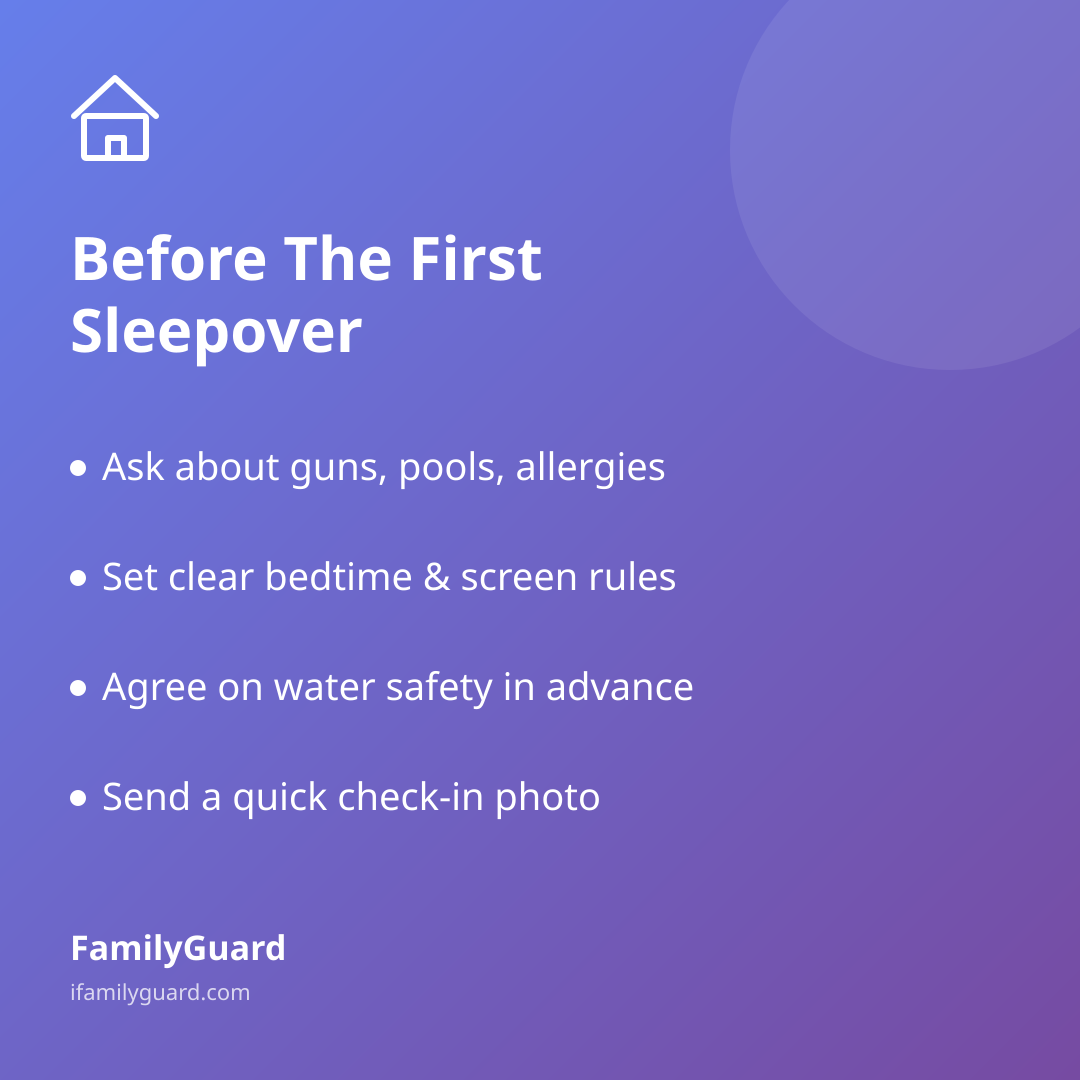
- Whether there's a firearm in the home, and if so, that it's stored unloaded and locked, with ammunition stored separately.
- Whether there's a pool, hot tub, or open water nearby, and what supervision looks like around it.
- Any allergies, medications, or medical conditions the visiting child has, and where their medication is kept.
- Who else will be in the home overnight, including older siblings or other guests.
- What the house's screen-time and bedtime rules will be, so there are no surprises.
None of this needs to feel formal. A quick text a day or two ahead — "just so you know, here's what our evening looks like" — usually puts everyone at ease and often prompts the other parent to share the same information back.
Water Safety Deserves a Special Mention
If your home has a pool, hot tub, or is near open water, it's worth being extra clear about supervision, even if swimming isn't the plan for the evening. The Centers for Disease Control and Prevention (2024) reports that drowning is the leading cause of death for U.S. children ages 1 to 4, and that constant, dedicated supervision — not just being nearby — is one of the most effective ways to prevent it. If a pool is on the property, agree in advance whether it will be covered, locked, or off-limits after dark, and make sure every parent knows the plan.
Set House Rules Kids Can Actually Follow
Every home runs a little differently, and kids feel more relaxed when they know what to expect instead of guessing. A short, friendly rundown at drop-off works better than a long list of rules. Consider covering:
- Bedtime and wind-down: when lights go off and what "quiet time" looks like before that.
- Devices: whether phones, tablets, or gaming stay on, get put away at a certain hour, or are only used together.
- Snacks and food: where they're kept and what's off-limits, especially with allergies in mind.
- Who to find if something's wrong: make sure every child knows which adult is in charge and where that adult will be sleeping.
Kids tend to settle in faster when the rules are stated plainly and kindly, rather than discovered by accident partway through the night.
Make Check-Ins Easy for Everyone
Parents dropping their child off at someone else's house for the night are often quietly hoping for one simple thing: a sign that their kid arrived safely and the evening is going fine. You don't need to over-communicate — a quick photo of the kids having pizza, or a short "all good here" message, usually covers it. Some families use a shared, consent-based tool like FamilyGuard so a parent can see that their child's phone made it to the right address, without either family needing to send constant updates back and forth. It's a small, transparent way to ease the natural worry that comes with a first sleepover, on both sides.
If the visiting child brought a phone, it's worth agreeing early on whether they can text their own parents to say goodnight — most kids feel more settled when that's allowed rather than restricted.
When Morning Comes
Wrap-ups go smoothly when they're planned the night before: agree on a pickup time, whether breakfast is included, and how you'll reach the other parent if plans shift. A quick, warm handoff — sharing a highlight or two from the evening — helps build the kind of trust that makes the next sleepover, at either house, even easier to arrange.
Hosting a sleepover is ultimately an exercise in the same thing families practice everywhere else: clear expectations, open conversation, and a little extra care for someone else's most precious person. Get those right, and the rest — the giggling, the late-night snacks, the inevitable extra hour before anyone actually falls asleep — takes care of itself.