
Your child has been invited to a friend's house for the first time, and there's a small flutter of nervousness mixed in with the excitement. That's completely normal. Handing your child off to another family, even for a couple of hours, is a quiet milestone — and a little preparation goes a long way toward making it feel easy for everyone.
The good news is that the conversation you need to have with the other parent isn't awkward or accusatory. It's just practical, the same way you'd ask about food allergies or nap schedules when your child was younger. A short, friendly exchange of information before the doorbell rings can save both families a lot of guesswork.
Why Asking Questions Is Normal, Not Nosy
It's easy to worry that asking about house rules or supervision will come across as judgmental. In practice, most parents appreciate it, because it shows you care about the details rather than just dropping your child off and driving away. Pediatricians actively encourage these conversations as a routine part of arranging a playdate, right alongside questions about pets or snacks.
According to HealthyChildren.org, the parenting website of the American Academy of Pediatrics (updated May 2024), a handful of simple questions can cover most of the situations that actually lead to injuries at someone else's home. None of them require an interrogation — they fit naturally into a text message or a quick chat at pickup.
The Questions Worth Asking
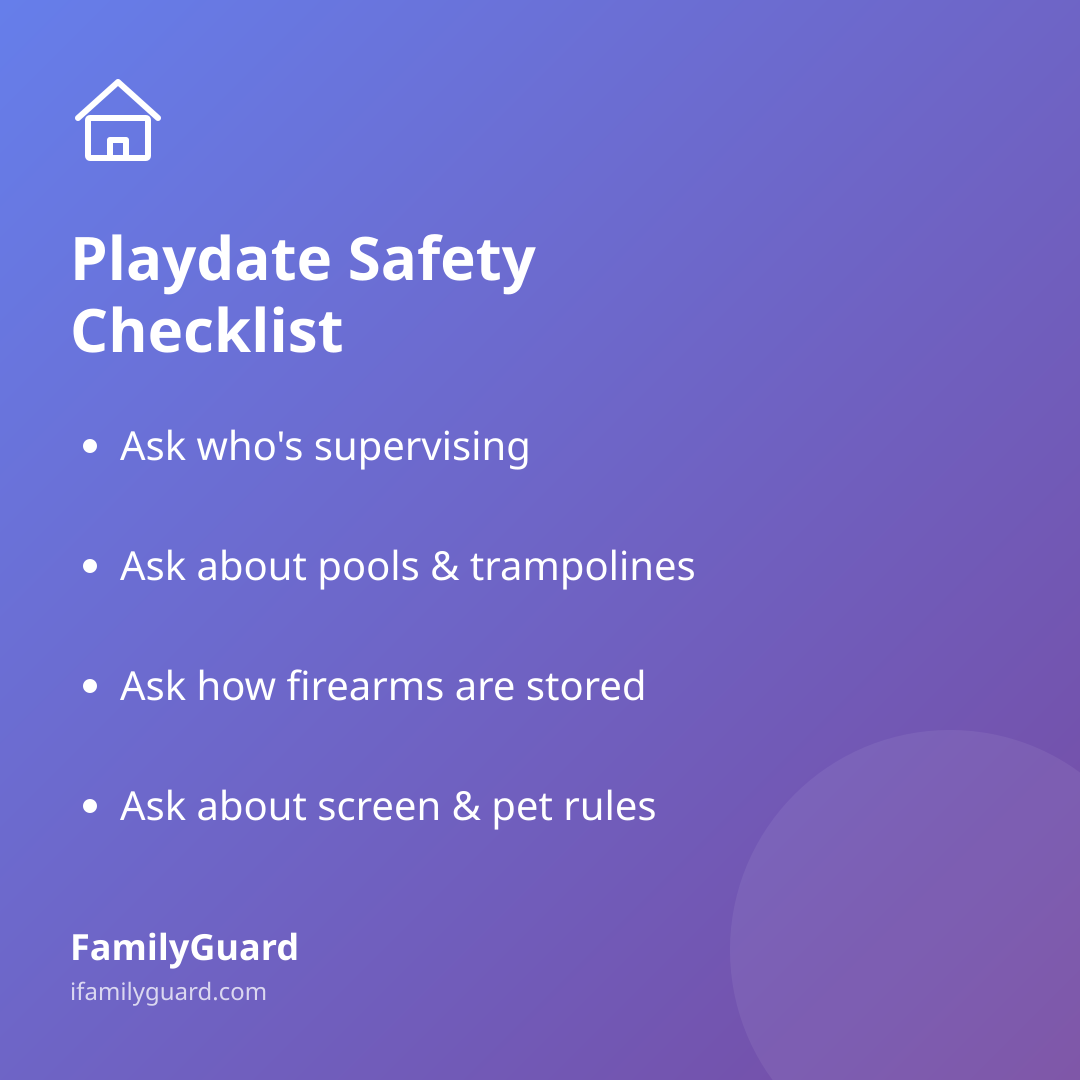
You don't need to run through this list like a checklist out loud. Weave the questions into a friendly text or a few minutes of conversation when you drop off or arrange the visit. The AAP's guidance points to a few areas that matter most:
- Who will be supervising? Will a parent be home, or another responsible adult? It's fine to ask, especially for younger children.
- Is there a pool, hot tub, or trampoline? These are common sources of injury for young kids, and it's worth knowing whether there's fencing, a cover, or an adult watching closely during water play.
- Are there firearms in the home, and how are they stored? The AAP recommends asking this as routinely as you'd ask about allergies. Safe storage means guns are unloaded, locked up, and stored separately from ammunition.
- What are the screen and media rules? Knowing what shows, games, or apps are allowed helps you decide if it matches what you're comfortable with, or gives you a chance to mention your own preferences.
- Are there pets? Especially useful to know if your child is nervous around animals or has allergies.
Framing these as "just so I know what to expect" tends to land well. Most parents will answer honestly and appreciate that you asked, because they're likely wondering the same things about your home when the visit goes the other way.
Making the Conversation Easy
A quick text often works better than an in-person conversation, since it gives the other parent a moment to think and respond without any pressure. Something like: "Excited for the girls to play Saturday! Quick check before I drop her off — will you be home, and is there a pool or trampoline they might use? Also wanted to flag she's allergic to peanuts, just in case."
Leading with your own information, like an allergy or a bedtime you need to stick to, often makes it easier for the other parent to share details in return. It turns the exchange into teamwork rather than a one-sided request.
It also helps to exchange basic logistics: your phone number, the address, and an expected pickup time. If your child carries a phone or smartwatch, a quick arrival alert for the friend's address can let you know they've gotten there safely and gently remind you when it's time to head back, without your child needing to send constant updates. Families using FamilyGuard often set this up as a one-time step, since it works within the family's own devices and isn't shared outside it.
What to Share About Your Own Home
The conversation goes both ways. If your child is hosting, be ready to answer the same questions you'd ask someone else: who's supervising, whether there's water access, your household's screen rules, and any pets. If you own firearms, being upfront about how they're stored isn't an overshare — it's the kind of detail that helps another family feel comfortable, and it reflects well on how seriously you take safety at home.
It's also worth mentioning any house rules that might surprise a visiting child, like no screens before dinner or a strict "ask before going outside" policy. A little context prevents mixed signals and helps kids relax into the visit instead of guessing at the rules.
As Kids Get Older, the Conversation Shifts
With younger children, most of this exchange happens parent-to-parent. As kids grow into the tween and early teen years, they'll often start coordinating playdates and hangouts themselves through texts or group chats. That's a healthy sign of growing independence, but it's still worth staying loosely in the loop — knowing whose house, roughly when, and how they'll get home.
Many families find that a simple check-in habit, like a text when they arrive and another before heading home, works well at this stage. It keeps communication light and mutual rather than feeling like a tracking requirement, and it gives kids practice at the kind of independent coordination they'll need later on.
A Small Habit With Real Payoff
None of this needs to feel formal. Over time, asking a few friendly questions before a playdate becomes second nature, and other parents will likely start doing the same with you. It's a small habit that builds trust between families and lets kids enjoy their visits while the adults quietly handle the details in the background.