
There's a particular kind of worry that shows up on a ski trip: you look up from clicking into your bindings, and the kid who was right behind you a second ago is gone — swallowed by a crowd of matching jackets and rental helmets. On a mountain, "where are you" isn't always a simple question. Trails split, lifts separate groups, gloves make phones hard to use, and cell signal can disappear entirely between the trees. None of that means a ski or snowboard day has to be stressful. With a little planning before anyone clips into a board or pair of skis, families can spend the day enjoying the snow instead of scanning the crowd.
Start With a Meeting Point, Not Just a Plan to "Stay Together"
Every family ski day benefits from one simple rule: agree on a specific, physical meeting point before you ever get on the lift. "Stay close" is hard to enforce once kids are moving at their own pace on skis or a board. A named location is not.
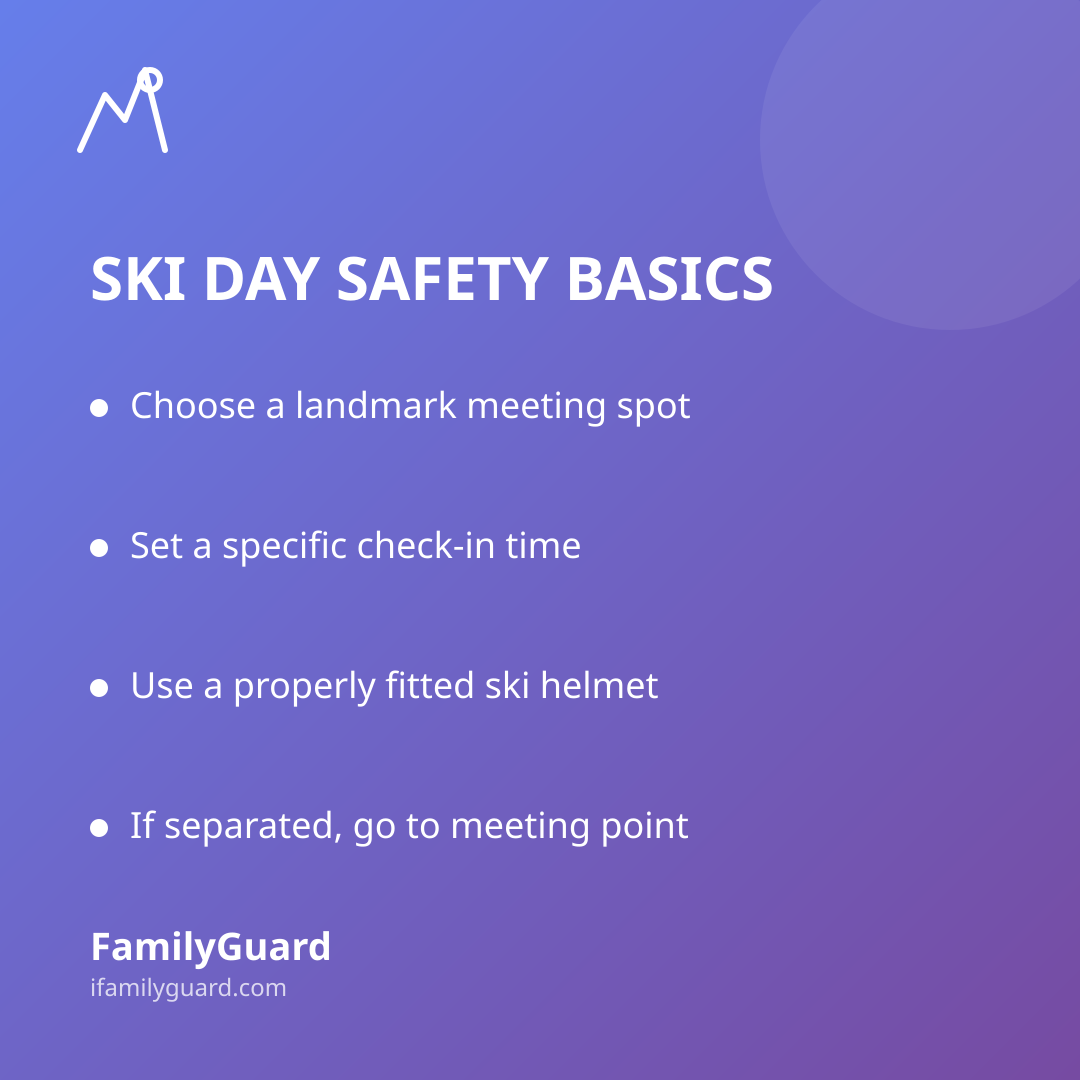
- Pick a landmark, not a vague area. "By the ski patrol hut at the base of the bunny slope" works. "Near the lodge" does not.
- Set a check-in time, not just a place. "Meet at the lodge entrance at noon for lunch" gives everyone a clear target, even if plans change.
- Decide what happens if someone doesn't show up. A simple rule — "wait 15 minutes, then ask ski patrol for help" — removes the guesswork for kids in the moment.
- Pick a backup spot in case the first one is crowded or hard to reach, like a specific chairlift base instead of the whole lodge.
Walking the route to the meeting point together on your first run of the day — rather than just describing it — makes it far more likely kids will actually find it later.
The Buddy System Still Works, Even for Confident Kids
Older kids and teens often want to ski or ride with friends rather than parents, and that's a reasonable, healthy part of growing independence on the mountain. The buddy system doesn't need to mean constant supervision — it just means nobody rides a lift or a run completely alone without someone knowing where they intended to go.
A few habits make this easy without feeling restrictive:
- Agree on which runs or areas are in bounds for the day, especially for less experienced skiers and riders.
- Have kids tell a parent (or a sibling) which lift or trail they're heading to before they go.
- Set a "if you're separated from your buddy" plan — usually: stop, wait a few minutes at the top or bottom of the run, then head to the family meeting point.
- Remind everyone that ski patrol, lift operators, and resort staff are there to help — approaching an adult in a resort uniform is always the right move if something feels off.
Helmets and Gear: The Unglamorous Part That Matters Most
It's easy to focus safety conversations on getting separated, but the most common risks on the mountain are physical ones — falls, collisions, and cold exposure. The American Academy of Pediatrics (2022) recommends that children, teens, and the adults skiing or riding with them always wear a properly fitted, sport-specific helmet for snow sports, noting that helmet use is associated with a significantly lower risk of head injury. A helmet designed for skiing or snowboarding fits differently than a bike helmet, so it's worth having it checked at the rental shop rather than assuming last year's helmet still fits a growing head.
Helmet types should match the sport they're designed for, because of real differences in how they're engineered to absorb impact. — American Academy of Pediatrics, HealthyChildren.org (2022)
The National Ski Areas Association recorded 49 catastrophic, life-altering injuries across U.S. resorts during the 2023/24 season, against roughly 60 million skier visits — a rate of less than one in a million visits, though slightly above the prior 10-year average of 41 (National Ski Areas Association, 2023/24 Catastrophic Injury Fact Sheet). Serious injuries remain rare, but they're not zero, which is part of why the organization tracks them closely to guide safety improvements at resorts. That's a good reminder to match terrain to a child's real skill level, not their confidence level — the easiest run on the mountain is always the right choice when in doubt.
Staying Connected When the Mountain Has Other Plans
Cell coverage at ski resorts is notoriously inconsistent — strong at the base lodge, patchy on the back side of the mountain, gone entirely in a gondola or a tree-lined run. It's worth setting expectations as a family before the trip: a text might take a few minutes to send, and that's normal, not a sign something is wrong.
A few things help bridge the gaps:
- Agree that if a message doesn't go through right away, the plan is to keep heading toward the scheduled meeting point rather than waiting in place for a reply.
- Check device battery before heading out — cold weather drains batteries faster, and gloved hands make charging mid-day inconvenient.
- If your family uses a location-sharing tool like FamilyGuard, a smart zone set up around the lodge or base area can send a gentle alert when everyone has arrived back together — handy for a quick headcount at lunch or at the end of the day, without anyone needing to send a message from a chairlift.
- Keep a basic paper backup: trail map with the meeting point circled, and the resort's main phone number, in case a phone is lost, wet, or dead.
Talking It Through Before the Lift Line
None of this needs to feel heavy. A two-minute conversation in the car or on the first chairlift ride up covers most of it: where we're meeting, what to do if we get separated, who to ask for help, and what time we're grabbing lunch. Framing it as "here's our plan for a great day" rather than "here's what could go wrong" keeps the tone light while still giving everyone — especially kids skiing or riding with some independence for the first time — a clear sense of what to do if the unexpected happens.
Ski and snowboard days are meant to be fun, and a little upfront planning is what lets them stay that way, even when the mountain, the weather, or the cell signal don't entirely cooperate.