
There's a particular kind of nervous excitement that comes with the words "Can I watch her while you run to the store?" Your older child isn't asking to stay home alone anymore — they're asking to be responsible for someone else. It's a genuine milestone, and it's normal to feel both proud and a little unsure about it.
The good news is that babysitting readiness isn't a mystery. There are well-established guidelines to help you gauge timing, and a few simple habits that make the actual experience go smoothly for everyone, including the sibling being watched.
Is Your Teen Actually Ready?
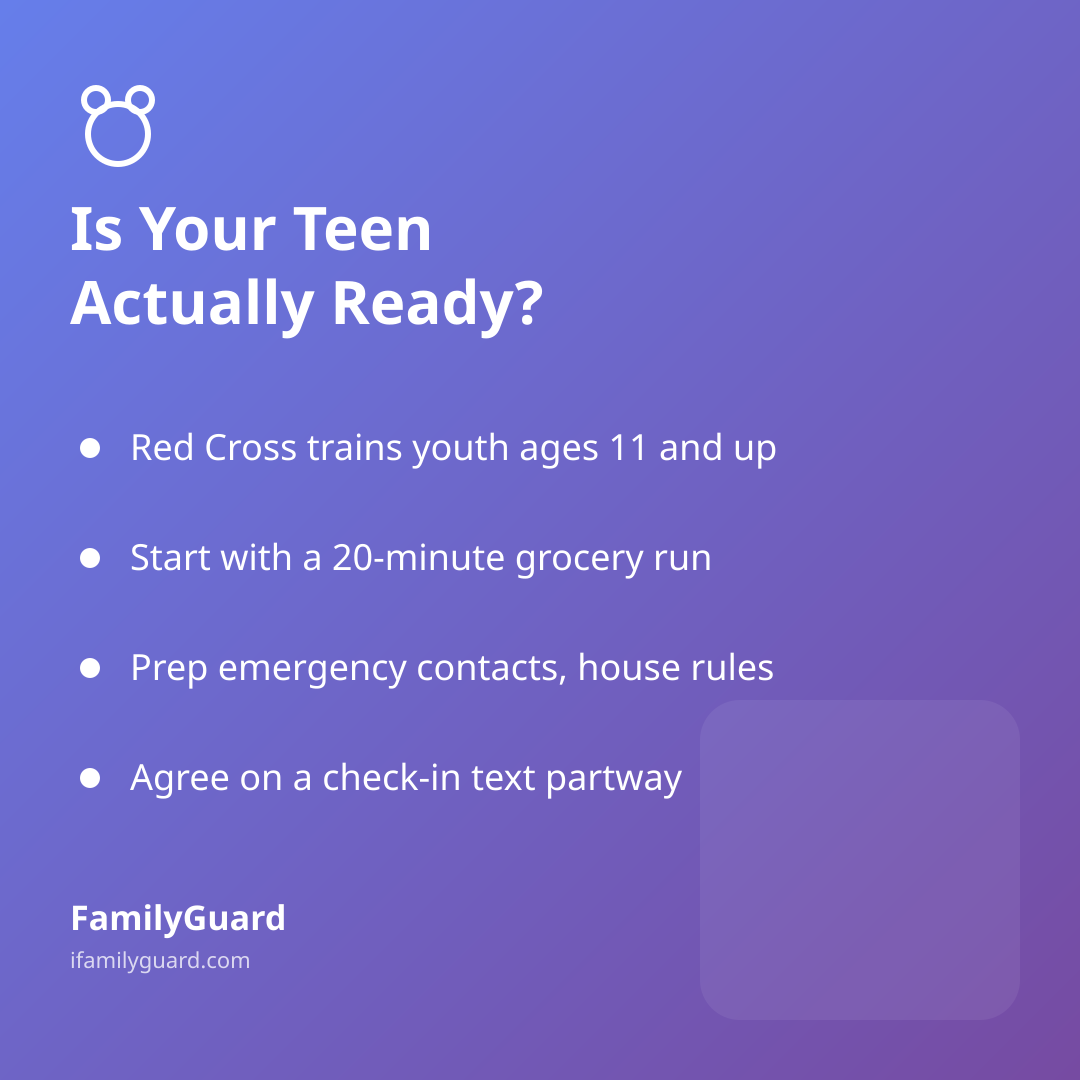
There's no single magic age, because readiness depends more on temperament and judgment than on a birthday. That said, expert guidance gives useful benchmarks. The American Red Cross, whose current babysitting curriculum was relaunched in 2025, designs its training for youth ages 11 and up, treating that age as a reasonable starting point for structured preparation rather than a green light on its own.
HealthyChildren.org, the American Academy of Pediatrics' parenting resource (last updated 2023), points to a few qualities worth checking for before handing over any responsibility for another child:
- They're comfortable being left in charge and don't feel anxious about it
- They show good judgment and common sense in everyday situations
- They can occupy themselves — and a younger sibling — without needing constant screen time
- They remember and follow safety rules, including how to respond if something goes wrong, and know not to open the door to strangers or announce online that an adult isn't home
If your teen checks most of these boxes, a short supervised trial — you nearby, doing yard work or working from the next room — is a low-stakes way to see how it goes before they're on their own.
Start Small and Build Up
The first time doesn't need to be a full evening. Pick something short and predictable: a 20-minute grocery run while the kids watch a show, or an hour while a baby naps. Short, well-defined windows let both your teen and your younger child build confidence gradually, and let you calibrate how it actually feels before extending the time.
As things go well, you can lengthen the stretch, add slightly more complex situations — like feeding or bedtime — and eventually let your teen handle an evening. There's no rush. A slower ramp-up now tends to mean fewer surprises later.
What to Prepare Together Beforehand
A few minutes of setup before you walk out the door can prevent most of the situations that make babysitting stressful. Sit down with your teen and go over:
- Emergency contacts — your number, a backup adult nearby, and when to call emergency services
- House rules — screen time limits, snacks, what's off-limits (the stove, certain cabinets, going outside)
- Basic first aid — where the kit is and what to do for a scraped knee or a bump on the head
- Your schedule — roughly when you'll be back, and what to do if you're running late
- A simple emergency plan — what "call me immediately" looks like versus "just mention it when I'm home"
Walking through this together, rather than just listing it, helps your teen feel prepared instead of tested. It also gives the younger sibling a chance to hear that their brother or sister is genuinely in charge, which tends to reduce pushback later.
Staying Connected While You're Away
Most babysitting worries aren't about anything going seriously wrong — they're about the small uncertainty of not knowing what's happening while you're gone. A quick check-in text partway through the outing, agreed on ahead of time, usually settles that for both of you.
Some families find it reassuring to use a shared family app during these early solo attempts — something like FamilyGuard, where everyone already sees each other's location and can reach a one-tap SOS button if something genuinely urgent comes up. It's not about watching your teen's every move; it's the same consent-based sharing the whole family already uses, just available if it's needed. Knowing there's an easy way to reach you — and that you can see they made it home from a friend's to relieve you before pickup — often does more for everyone's confidence than any lecture about responsibility.
Debrief Afterward, Without Making It a Test
When you're back, ask your teen how it went — genuinely, not as a pop quiz. What was easy? What felt hard? Did the younger sibling listen? This isn't about grading the performance; it's about learning together what worked and what to adjust next time. Teens who feel trusted to reflect openly, rather than judged, tend to grow into the role faster and more confidently.
A Milestone Worth Celebrating
Letting your teen take on this kind of responsibility is a sign of real trust, and most kids rise to meet it. With a bit of preparation, a gradual ramp-up, and an easy way to stay in touch, a first babysitting stint can go from nerve-wracking to genuinely rewarding — for your teen, for their younger sibling, and for you.