
It usually starts with a hopeful knock at your door, or a text from another parent: "We're heading to the lake this weekend — would it be okay if your daughter came along?" It's a nice moment. It's also, for a lot of parents, the first time they'll send their child off for a multi-day trip without being the one in charge.
You trust this family. You like their kid. And still, a small, sensible voice asks: what do I actually need to know before saying yes? The good news is that this kind of preparation doesn't have to feel awkward or overly cautious — a few calm conversations and a bit of shared information can make the whole trip easier for everyone, including the host family.
Start With a Normal, Friendly Conversation
Most of what you need to know can come out of an easy conversation, not an interrogation. Parents who regularly think through these questions tend to ask about who else will be around, what the days will actually look like, and who's supervising during activities like swimming or driving. The American Academy of Pediatrics' 2024 guidance on questions to ask before a playdate applies just as well to a weekend trip — it's really about understanding the plan, not doubting the people.
A few things worth covering before they leave:
- What's the general itinerary, and will plans likely change once they're there?
- Who will be around — just the immediate family, or other relatives and friends too?
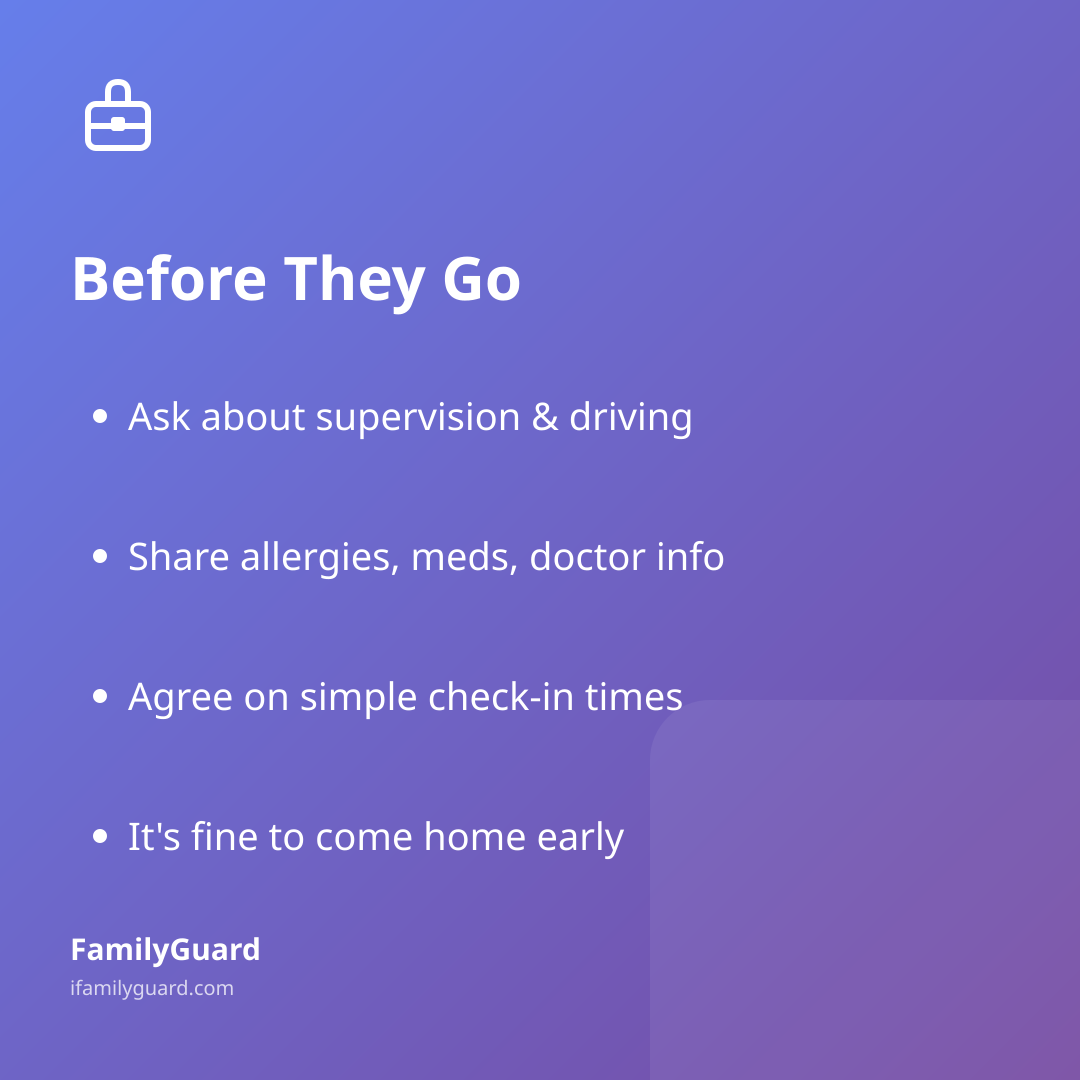
- Will there be swimming, boating, or driving, and who's supervising those moments?
- What's the best way to reach the adult in charge directly, not just your own child?
None of this needs to sound suspicious. Framing it as "just so I have it all written down" tends to put everyone at ease, including parents who are doing the same prep for their own kids.
Send Them With the Right Information, Not Just a Bag
If something does come up — a stomach bug, an allergic reaction, a scraped knee that needs a doctor's visit — the host family shouldn't have to guess at your child's medical history or hunt for your phone number from memory. The American Academy of Pediatrics and the American College of Emergency Physicians maintain an Emergency Information Form (last updated 2024) for exactly this situation: a simple one-page summary of allergies, medications, conditions, insurance details, and emergency contacts that any caregiver can hand to a doctor without missing anything important.
You don't need the full form for a weekend at a friend's cabin, but the idea is worth borrowing. A short note or a shared document covering the basics takes just a few minutes to put together and can save real time and stress if it's ever needed:
- Allergies, medications, and dosages
- Your pediatrician's name and number
- Insurance information, if relevant to where they're traveling
- Your own emergency contact details, plus a backup person who can be reached if you can't
Written consent can matter too. If your child might need medical care while you're not there, a brief signed note authorizing the host parent to seek treatment on your behalf can prevent delays at an urgent care clinic or pharmacy.
Agree on How You'll Stay in Touch
Once your child is out the door, the question shifts from "what if something happens" to "how will I know they're okay." This is where a simple, agreed-upon rhythm helps far more than constant checking. Decide together — with your child, not just about them — when a quick check-in makes sense: after they arrive, before bed, and whenever plans change significantly.
Many families find it reassuring to turn on temporary location sharing for the length of the trip, so there's no need to keep texting "are you there yet?" For a trip like this, FamilyGuard can be useful in a low-key way: your child knows it's on, it's just between your family, and it gives them a one-tap way to reach you if they ever feel unsure about something — without turning the whole trip into something that feels monitored.
It's worth saying plainly to your child before they go: if anything feels off, even something small, they can always call you, no explanation needed in the moment. Kids are far more likely to speak up when they know in advance that reaching out won't lead to a lecture.
Let Them Know They Can Change Their Mind
Sometimes the hardest part of a trip isn't a medical emergency — it's a kid who's homesick, uncomfortable with a last-minute plan change, or just ready to come home a little early. Normalizing that possibility before departure removes a lot of pressure. A quick line like "if you want to come home early, that's totally fine, just tell us" gives your child permission to be honest instead of pushing through discomfort to avoid seeming difficult.
This is also a good moment to agree on a simple phrase they can use if they want out of a situation without making it a big deal in front of friends — something low-key that signals "please call me" without anyone else needing to know what it means.
Welcome Them Back, No Debrief Required
When they're home, resist the urge to run through a checklist of questions right away. A relaxed "how was it?" usually opens the door to more honest detail than a formal recap. If something did come up during the trip, this is the time it tends to surface naturally — and a quick thank-you note to the host family goes a long way toward making the next invitation easy to say yes to.
Sending your child off with another family is, in its own small way, a vote of trust — in them, and in the people looking after them. A little preparation doesn't undercut that trust; it just makes it easier to relax while they're gone and to look forward to the next trip, rather than dread it.