
Every week brings a new batch of tech headlines, and most of them never make it into a family conversation — understandably, since a lot of it is written for engineers, investors, or policymakers. This digest pulls out what actually happened in AI, cybersecurity, and online safety between November 2 and November 8, 2026, and translates it into what it means for your household. Nothing here is designed to alarm you — just to help you stay one step ahead.
AI & New Tools
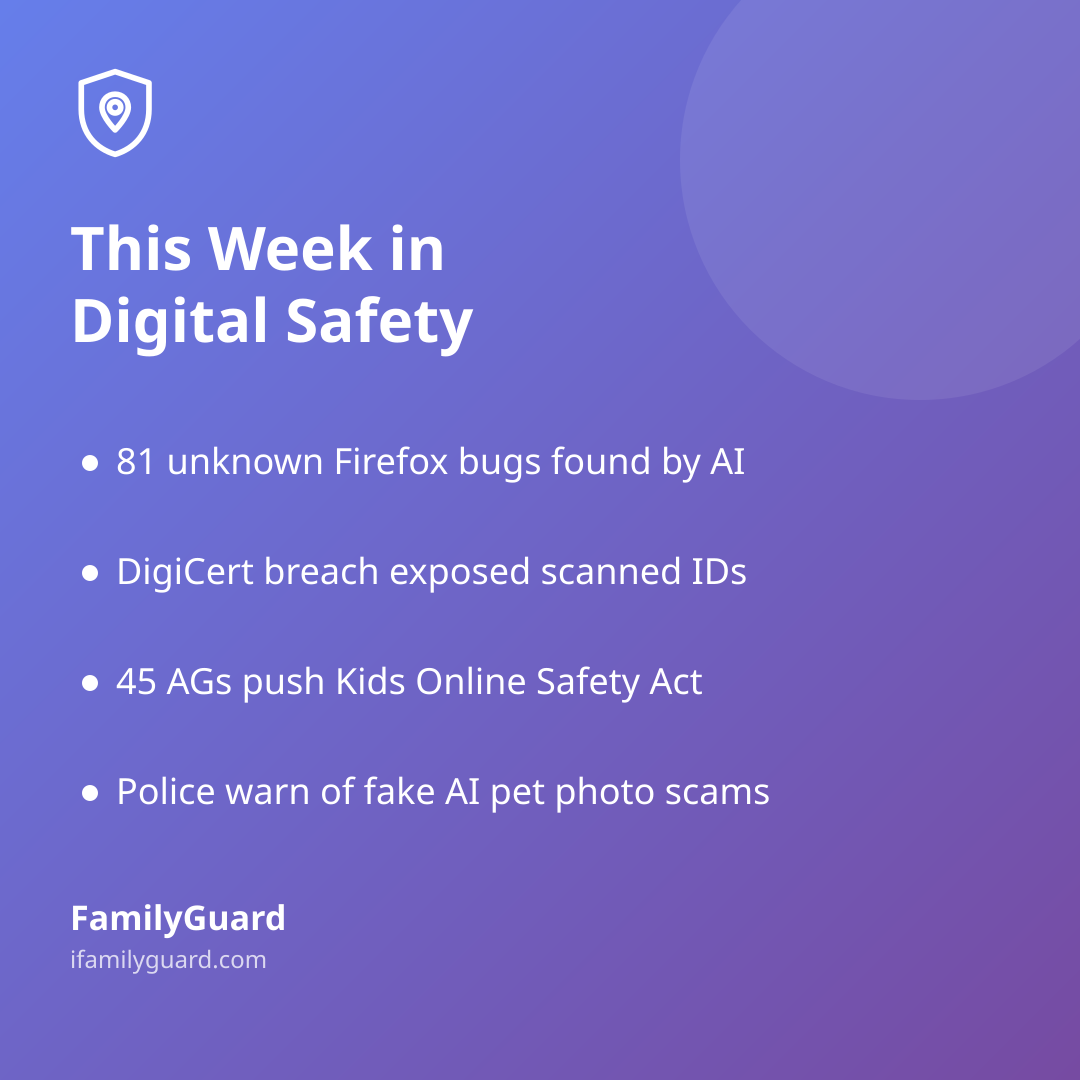
- OpenAI launched a cybersecurity-focused AI model — with new safeguards attached. On November 5, OpenAI introduced GPT-6 Cyber, a model built for authorized security research, which in testing found 81 previously unknown Firefox vulnerabilities and built working exploit code for hundreds of known Linux bugs. Because that same vulnerability-finding ability could be misused, OpenAI classified it as a "Critical" risk model under its internal safety framework and limited the initial rollout to vetted subscribers only. Source: OpenAI (2026); The Hacker News (2026). Why it matters for families: AI is now a tool on both sides of the cybersecurity fight, which is exactly why OpenAI built in extra restrictions. The upside is that companies can find and fix flaws faster — which, over time, means safer apps and devices for everyone, including the ones your kids use every day.
- A fast-growing AI startup is raising $5 billion. Thinking Machines Lab, founded by former OpenAI executive Mira Murati, is reportedly closing a new funding round at a $40 billion valuation — more than triple what it was worth just last year. Source: Tech Funding News (2026). Why it matters for families: It's a reminder of how quickly new AI products and chatbots are being built and funded. New tools will keep reaching kids' phones and tablets fast — it's worth checking in regularly on what's new before your child discovers it first.
- Even big companies are reining in AI spending. Apple, Goldman Sachs, and Accenture have all tightened internal limits on how much staff can use AI tools, citing cost and productivity concerns. Source: 9to5Mac (2026). Why it matters for families: It's a useful, calming data point — even the companies building this technology are still figuring out sensible limits on it. There's no need to feel behind if your family is still working out its own AI and screen-time rules.
Cybersecurity & Threats
- DigiCert confirmed a data breach involving identity documents. The security certificate company disclosed that an internal archive, exposed during a server migration error, was accessed without authorization — a small portion of affected customer accounts included scanned IDs such as driver's licenses or passports. Source: SecurityWeek (2026). Why it matters for families: It's a good nudge to check which services actually hold copies of your family's ID documents, and to remove or update them where you can. Fewer places storing sensitive documents means less exposure if a breach happens.
- A blockchain infrastructure company was breached by an AI-powered attack. Chainstack disclosed on November 3 that attackers used an autonomous AI "agent" to break into a development system and escalate access to production data, including password hashes. Source: The Hacker News (2026). Why it matters for families: Attackers are increasingly using AI to work faster and at larger scale. The best home defense hasn't changed: unique passwords for every account and two-factor authentication turned on wherever it's offered, especially for email and financial accounts.
Online Safety & Privacy
- 45 state and territory attorneys general urged Congress to pass the Kids Online Safety Act. On November 4, a bipartisan coalition sent a letter pushing for minimum federal safety standards on social media and gaming platforms used by minors. Source: National Association of Attorneys General (2026). Why it matters for families: Whatever happens in Congress, the push shows growing, cross-party agreement that platform design — not just parental vigilance — needs to change. Worth watching, and worth continuing to use the privacy and screen-time settings already available on your kids' apps in the meantime.
- West Virginia sued Snapchat over a teen sextortion case. The state's attorney general filed suit on November 5, alleging the platform misled families about safety risks, including around its "My AI" chatbot's handling of conversations and location data. Source: WV MetroNews (2026). Why it matters for families: Sextortion scams typically start with a stranger posing as a peer. It's worth a calm, no-blame conversation with kids on any messaging app: never send a private photo to someone they haven't met in person, and tell a trusted adult immediately if anyone pressures or threatens them — they will not be in trouble for asking for help.
- Scammers are faking "found" pet photos with AI. Police in several U.S. and Canadian cities warned this week that criminals are using AI to generate fake photos of injured or "rescued" pets, then demanding reward money from distressed owners — in some cases even threatening the animal to pressure a quick payment. Source: Bitdefender (2026). Why it matters for families: This one's easy to fall for because it preys on emotion. If you ever post about a missing pet, avoid sharing identifying details publicly, ask anyone who claims to have found it for a fresh, specific photo, and never wire money or send gift cards before verifying with a shelter or local vet directly.
This week's takeaway for families
- Do a quick document check. After the DigiCert news, take five minutes to recall which services or apps store scanned copies of family IDs, and delete what you no longer need there.
- Keep the sextortion conversation open, not one-time. A single talk rarely sticks — kids benefit from knowing, repeatedly and without judgment, that they can come to you if a chat with a stranger turns uncomfortable.
- Verify before you pay — always. Whether it's a "found pet" message or any other urgent money request online, pause and confirm independently. It's a habit that protects against most of this week's scams, and the next ones too. For families who already use consent-based tools like FamilyGuard to stay in touch, that same instinct — check in directly with each other rather than trusting an unexpected message — is the simplest safeguard of all.
Sources
- OpenAI — Introducing GPT-6 Cyber (2026)
- The Hacker News — OpenAI Launches GPT-6 Cyber After AI Helps Find 81 Firefox Flaws, 948 Linux Exploits (2026)
- Tech Funding News — Accel to lead $5B round for Thinking Machines Lab at $40B valuation (2026)
- 9to5Mac — Report: Apple reduces employees' AI token allowances (2026)
- SecurityWeek — DigiCert Data Breach Impacts Business Customer Information (2026)
- The Hacker News — Chainstack Reports Production Systems Breach Exposing Customer Data and Password Hashes (2026)
- National Association of Attorneys General — 45 State and Territory Attorneys General Press Congress to Protect Kids Online (2026)
- WV MetroNews — West Virginia attorney general sues Snapchat over teen sextortion deaths (2026)
- Bitdefender — Scammers Use AI Images of Missing Pets to Demand Money (2026)