The storm warning flashes on your phone, the sky turns green-gray, and your first instinct is to call your teenager to make sure they're heading home. But the call won't connect. It's not that anything happened to them — it's that thousands of other people in your area are trying to make the exact same call at the exact same moment.
This is one of the most common, and most fixable, gaps in family safety planning. A simple communication plan, built calmly on an ordinary day, can make all the difference when a storm rolls in or the power goes out.
Why Phone Calls Are Often the First Thing to Fail
During severe weather, it's rarely a single dramatic event that cuts off communication. More often, it's a combination of ordinary strain: cell towers running on backup batteries that eventually drain, too many people trying to call at once, and networks that were never designed to handle a whole neighborhood dialing simultaneously.
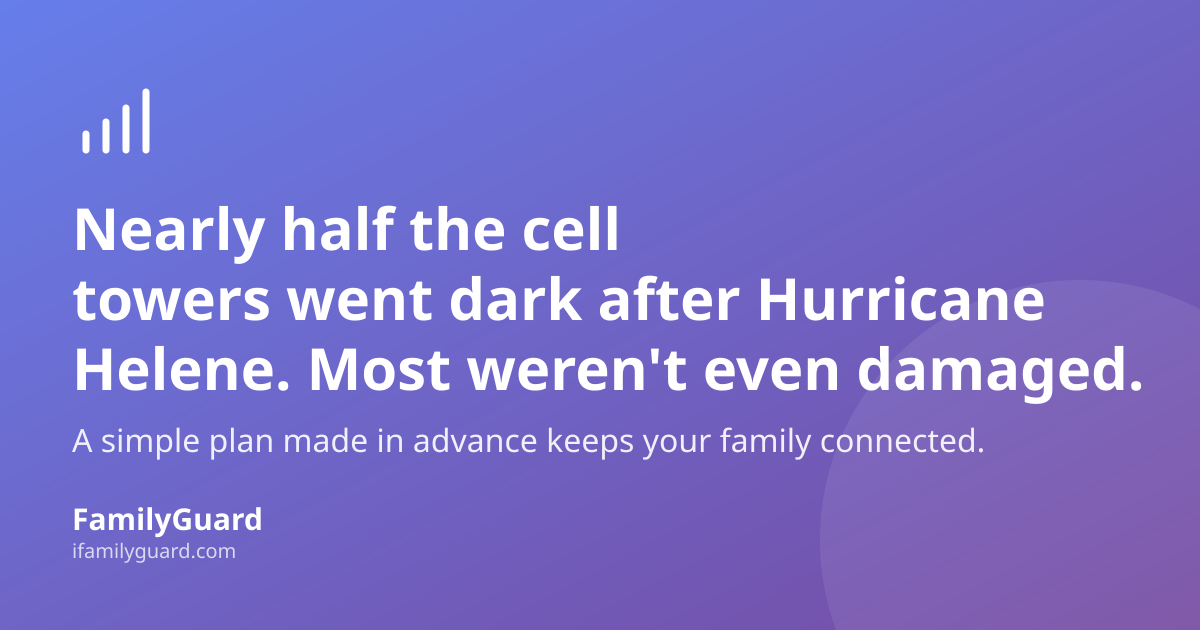
The scale of this can be surprising. In its Communications Status Report on Hurricane Helene, dated October 1, 2024, the Federal Communications Commission reported that nearly 49% of cell sites in the North Carolina counties impacted by the storm were out of service. Most of that wasn't storm damage to the towers themselves — it was lost power and downed connections between towers, both of which can happen even from a "regular" severe storm, not just a major hurricane.
Voice calls also tend to be the first thing to jam, because each call ties up a dedicated connection on a cell tower with limited capacity for handling them at once. Understanding that ahead of time takes the mystery — and the panic — out of a dropped call.
Build the Plan Before You Need It
The best time to make a family communication plan is on a calm afternoon, not while a storm is bearing down. FEMA's Ready.gov program recommends every household put a simple plan in writing, and it doesn't need to be complicated:
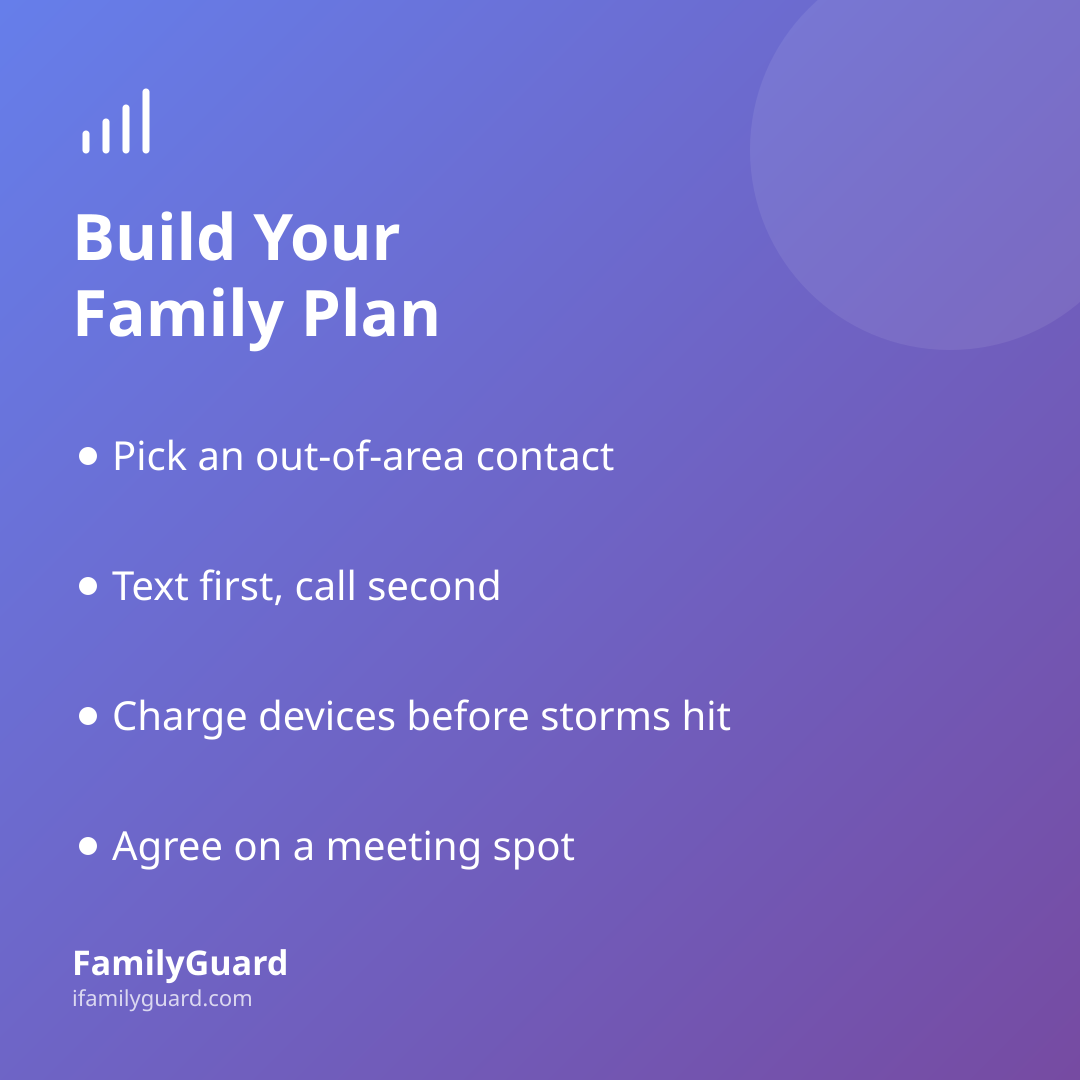
- Pick an out-of-area contact. Choose a relative or close friend who lives outside your city or region. Local phone lines often jam first, but long-distance connections frequently still work. If family members can't reach each other directly, everyone calls (or texts) that one person instead.
- Agree on a meeting spot. One near home, and one outside the neighborhood in case you can't get back.
- Write it down and keep a copy offline. A phone number saved only in a dead phone doesn't help. Put key numbers on a card in a wallet or backpack.
- Include every caregiver. Grandparents, sitters, and anyone who might be with your kids when the weather turns should know the plan too.
- Practice it once. A five-minute run-through at the kitchen table is enough for kids to remember it later.
Text First, Call Second
When networks are congested, text messages have a much better chance of getting through than a voice call, because they require far less bandwidth and can queue and resend automatically until they connect. The FCC's own emergency communications guidance advises exactly this: save voice calls for true emergencies, and use texting as the default way to check in during a storm or outage.
It's worth saying this directly to kids and teens, since their instinct — like most adults' — is to call first. A quick family agreement like "if you can't reach me by call, text right away, and I'll text back as soon as I can" removes a lot of anxiety on both ends.
If your family already has a habit of checking in through a shared app or group chat, lean on it. Some families use an app like FamilyGuard for everyday check-ins specifically because text-based messages tend to get through even when calls won't, and everyone already knows to look there first — no fumbling to remember a backup plan mid-storm.
Keep Devices Ready Before the Power Goes Out
A phone with a dead battery is no better than no phone at all. A few habits make a real difference:
- Charge every phone, tablet, and power bank fully as soon as severe weather is forecast — don't wait until the sky darkens.
- Keep a car charger and a small backup battery pack somewhere easy to grab, and check occasionally that it still holds a charge.
- Turn on low-power or battery-saver mode early, and dim screens — small changes that stretch a charge for hours.
- If your family uses a shared check-in app, get in the habit of glancing at everyone's battery and device status before a storm, so you know who might go quiet first and can plan around it.
A generator or car battery can also keep at least one phone charging through a longer outage, which matters most for whoever is checking in most often, like a solo teen driver or a parent working late.
Talking to Kids About the Plan — Without Scaring Them
The goal is to make this feel like a normal household routine, similar to a fire drill, not a warning that something terrible is about to happen. Framing helps a lot:
"Sometimes storms make phones act weird for a little while. If you can't reach me, that doesn't mean anything's wrong — it just means we go to our backup plan. Text me, and if you really can't reach anyone, head to Grandma's."
Kids generally find this reassuring rather than frightening, because it replaces uncertainty with a clear next step. The plan becomes something they own, not something that happens to them.
A Small Plan That Pays Off Big
Most families will never face a hurricane, but power outages from ordinary summer storms or winter ice are common almost everywhere. A communication plan built in five calm minutes today means that when the lights flicker and a call won't go through, nobody in your family has to wonder what to do next. That's the real goal — not eliminating storms, but making sure your family stays connected through them.