When people picture a family safety plan, they usually picture two people: a parent and a child. But for a lot of families, the real daily picture is bigger than that. Grandma picks the kids up on Wednesdays. Uncle Theo watches them during winter break. Grandpa is the one who waits at the bus stop when both parents are stuck in meetings. If your family's safety plan only accounts for parents, it may be missing some of the people your kids actually spend the most time with.
Bringing extended family into the loop doesn't have to be complicated or awkward. It just takes a little intention — and, as always, everyone's buy-in.
Why Extended Family Belongs in the Plan
Grandparents, in particular, play a bigger caregiving role than many people realize. According to the Pew Research Center (2026), about 70% of U.S. grandparents ages 65 and older are in regular contact with their grandchildren — several times a month or more — and roughly one in five say they or their spouse spent 100 hours or more caring for a grandchild over a two-year period. That's not an occasional visit; that's a real caregiving relationship.
If a grandparent is the one picking your child up from school twice a week, they probably need to know the same things you do: where your child is supposed to be, how to reach you fast, and what the plan is if something feels off. The same goes for an aunt who hosts sleepovers, a grown sibling who drives your teen to practice, or a close family friend who's basically family at this point.
What to Share — and With Whom
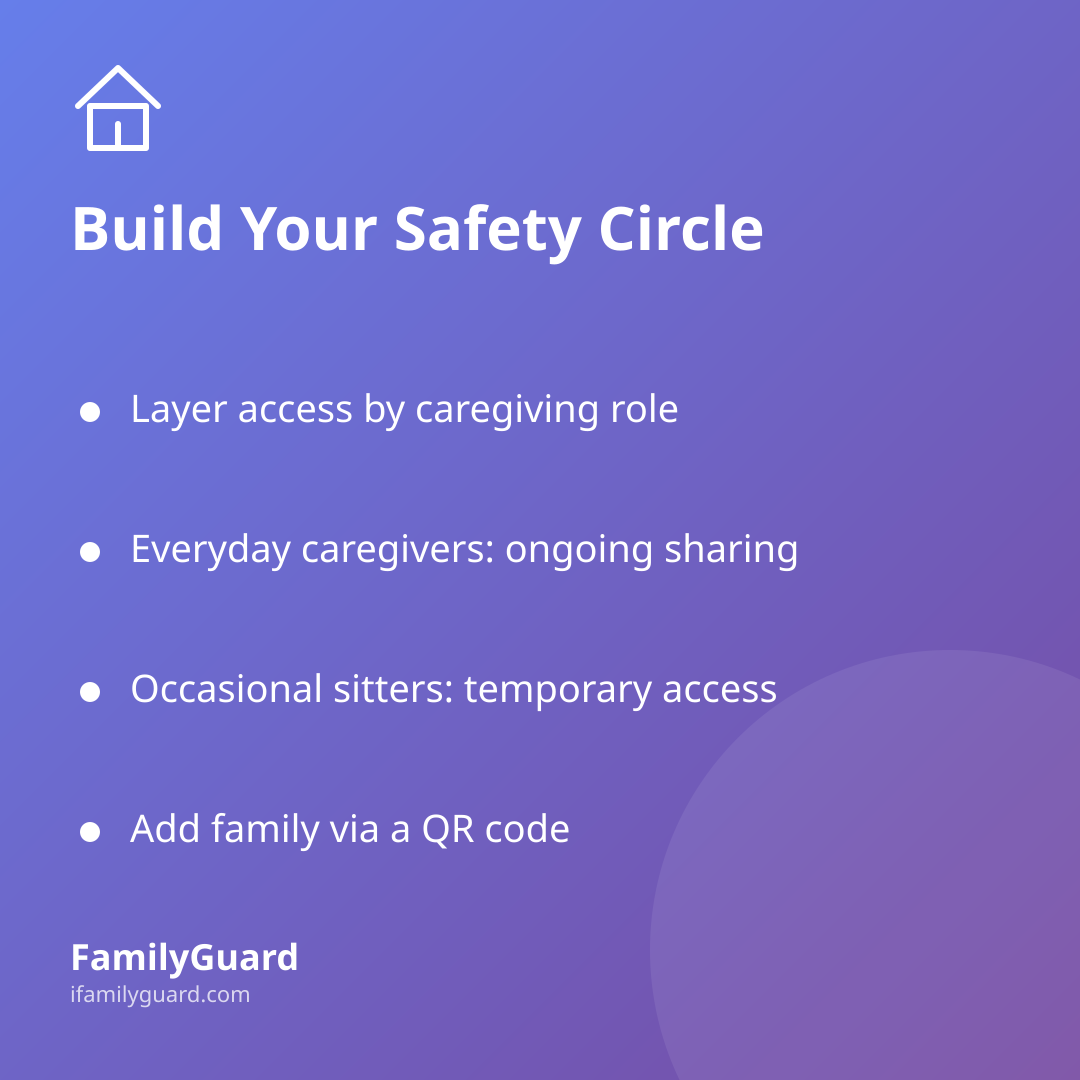
Not everyone in your extended family needs the same level of access, and that's completely fine. A safety circle doesn't have to be all-or-nothing. Think about it in layers, based on how much time someone actually spends with your kids:
- Everyday caregivers (a grandparent who does regular pickups, an aunt who babysits weekly) may benefit from ongoing, two-way location sharing and a spot in the family group chat.
- Occasional caregivers (someone watching the kids for a weekend trip or a holiday) might only need temporary access for that specific window of time.
- Emergency contacts (someone who lives nearby but isn't a regular caregiver) may just need to be listed on your child's lock-screen emergency info and know the family's basic routines and code word.
The key is that every layer is something the people involved have agreed to — including your child, who should know who can see their location and why. This isn't about adding more eyes on your kids without their knowledge; it's about making sure the people already caring for them have what they need to do that well.
Starting the Conversation With Grandparents
Bringing a grandparent into your family's digital safety tools can feel like a bigger ask than it is, especially if they're less comfortable with smartphones. A few things tend to help:
- Lead with the "why," not the app. Frame it as "I want you to be able to reach us fast if you're watching the kids," not "you need to download this."
- Keep the first conversation small. Start with one simple thing — knowing the pickup routine, having everyone's numbers saved, agreeing on a code word — before adding any apps or settings.
- Offer to set it up together. A five-minute walkthrough on their phone, in person, goes a lot further than a text with instructions.
- Respect their pace. Some grandparents will be eager to use location sharing and a family chat. Others may prefer a phone call check-in instead — and that's a valid way to stay connected too.
Setting Up the Circle in Practice
Once everyone's on the same page, the setup itself is usually the easy part. Many families use a shared family safety app for this exact reason — it lets a grandparent, aunt, or regular babysitter join the same consent-based circle as parents, see location and arrival alerts only while they're actively caring for the kids, and reach everyone instantly if there's an issue. FamilyGuard, for example, makes it simple to add an extended family member with a QR code, so a grandparent isn't stuck typing in long account details on an unfamiliar screen.
Beyond the app, a few low-tech touches round things out nicely:
- Make sure grandparents and regular caregivers have the same emergency contact list parents do.
- Walk them through your family's code word or check-in routine, so it means the same thing no matter who your child says it to.
- Loop them into smart zone or arrival alerts for the places that matter to them, like "arrived at Grandma's house" after school.
Keeping It Comfortable for Everyone
As with any part of a family safety plan, this one works best when it's revisited now and then rather than set up once and forgotten. Maybe a grandparent's caregiving role changes with the seasons, or a teen starts preferring to text Grandpa directly instead of going through a group chat. Check in occasionally — with your child and with the extended family member — to make sure the setup still fits how everyone actually lives and feels respectful to all involved.
Extending your safety plan beyond "just the parents" isn't about adding more surveillance to your child's life. It's about making sure the people who already show up for your kids — the ones who sit with them at Sunday dinner, pick them up when the car breaks down, or stay over when you travel — have exactly what they need to keep that care going smoothly, with everyone's knowledge and agreement built in from the start.