
There's a reason Halloween sticks in kids' memories long after the candy is gone: the costumes, the neighborhood energy, the small thrill of ringing a stranger's doorbell and getting a treat instead of a scolding. It's also a night with more moving parts than most — groups of kids crossing streets in the dark, driveways full of distracted drivers, and older kids who want to roam farther than usual with friends instead of parents. None of that means the night needs to feel stressful. A little planning ahead of time lets everyone relax and actually enjoy it.
Why Halloween night deserves a bit of extra care
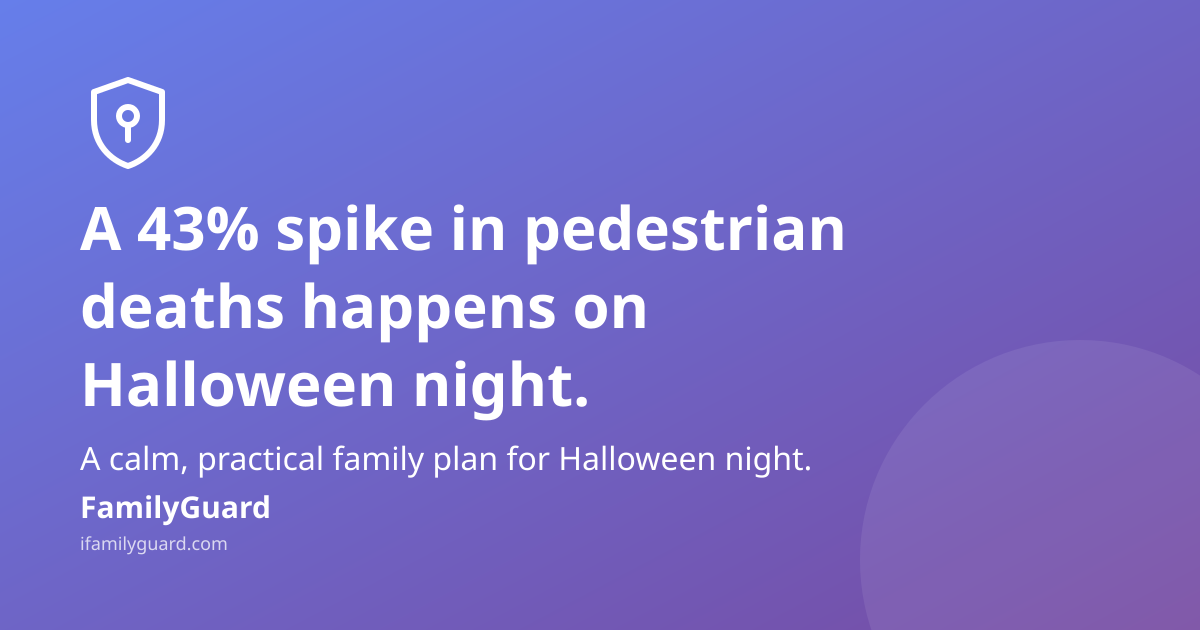
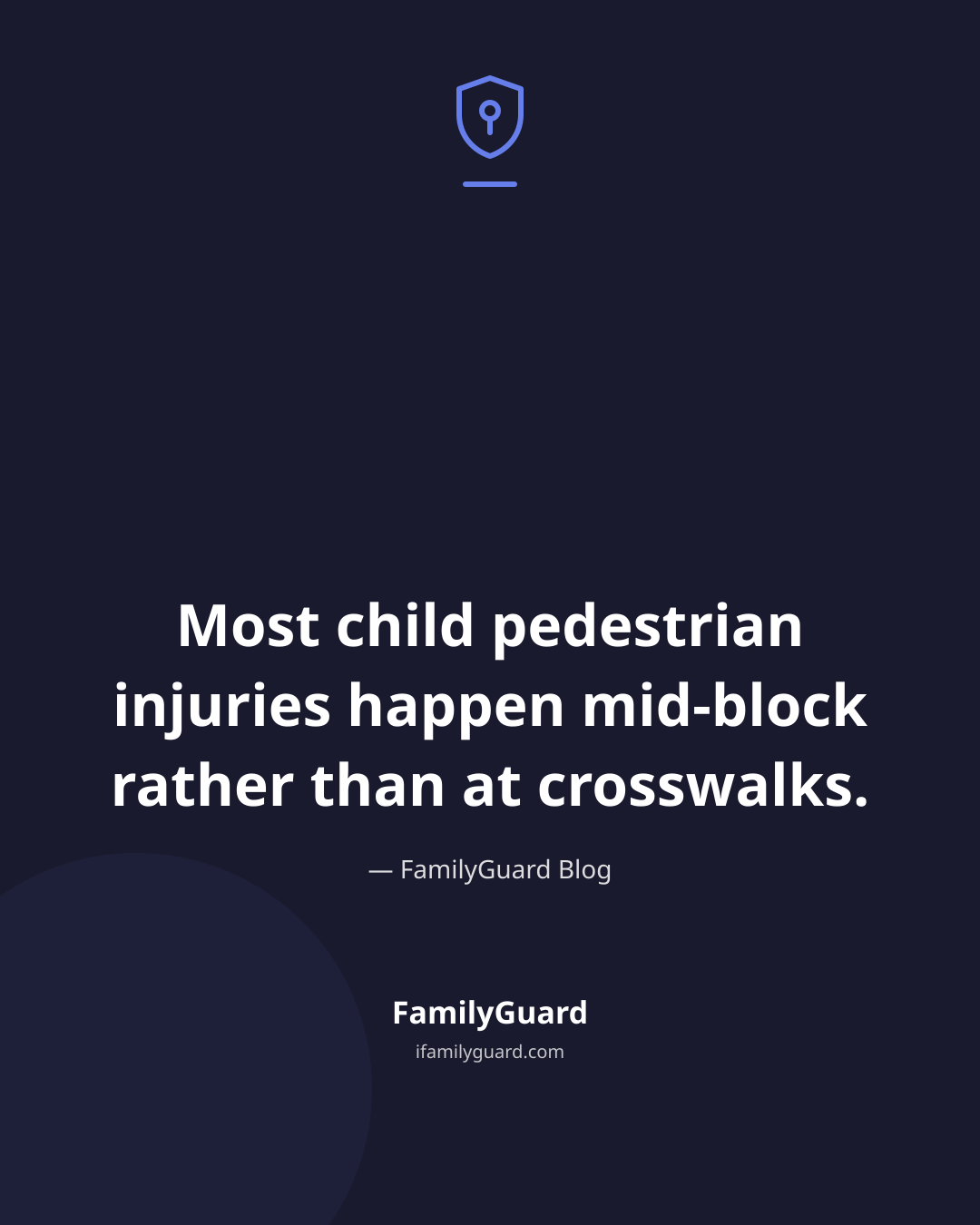
Pediatric researchers have looked closely at what makes Halloween different from an average evening, and the pattern is consistent: more children are out walking after dark, often in low-visibility costumes, often distracted by excitement or friends. A widely cited study published in JAMA Pediatrics analyzed over 40 years of U.S. pedestrian fatality data and found a 43% higher rate of pedestrian deaths on Halloween evening compared with the same time on other nights of the year, with the added risk concentrated in early evening hours when trick-or-treating peaks (Staples et al., JAMA Pediatrics, 2018). The American Academy of Pediatrics has also noted that most child pedestrian injuries happen mid-block rather than at crosswalks, which is exactly the pattern of a typical trick-or-treat route that hops from yard to yard (American Academy of Pediatrics, Pediatrics, 2023).
None of this is meant to cause worry — it's simply useful context. Knowing when and how the risk shows up makes it easy to plan around it, and most of the fixes are refreshingly simple.
Walk the route together before the sun goes down
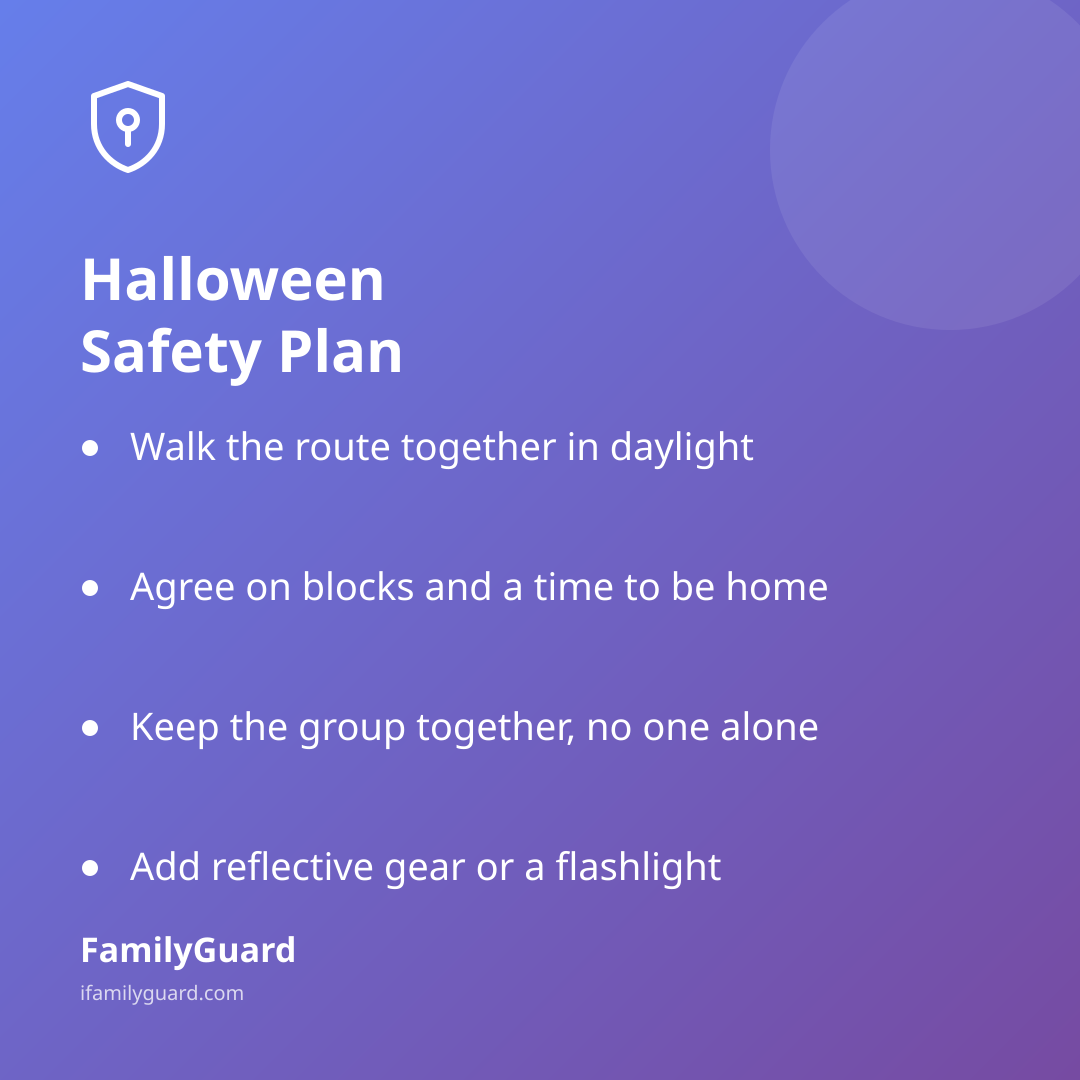
If your kids are old enough to trick-or-treat with friends instead of a parent, spend ten minutes beforehand looking at the route together — ideally by actually walking part of it in daylight. Point out which streets have sidewalks, where the streetlights are sparse, and which intersections need extra caution. The American Academy of Pediatrics recommends sticking to well-lit streets, using sidewalks or facing traffic when there isn't one, and never assuming a driver has seen you, even at a marked crossing (HealthyChildren.org, American Academy of Pediatrics, 2025).
A few habits that make a real difference:
- Agree on a specific set of streets or blocks, and a time to be home — not just "a couple hours."
- Keep the group together with a simple buddy system: no one splits off alone, even to catch up to a friend.
- Add something reflective to costumes and bags, or carry a flashlight — dark, full-coverage costumes look great in photos but are hard to see from a car.
- Save the phone scrolling for later. Walking while texting or watching a video is one of the easiest habits to slip into on an exciting night, and it's also one of the easiest to avoid with a quick reminder beforehand.
Agree on how you'll stay in touch — and how you'll find each other
For younger kids trick-or-treating with a parent, staying connected isn't really a question. The bigger conversation is usually with tweens and teens who want some independence but still need a way to reach you, and you them, if plans change.
Before anyone heads out, agree on the basics together: when to check in, what to do if the group decides to change the route, and how to ask for help if something feels off — a lost buddy, a house that seems unwelcoming, a ride that falls through. Many families find it reassuring to have location sharing turned on for the evening, purely as a two-way, agreed-upon thing rather than something sprung on a kid at the last minute. In an app like FamilyGuard, this can be as light-touch as a smart zone alert that quietly lets you know when the group has arrived back at a friend's house or turned toward home, so you're not the one sending "where are you now?" texts every twenty minutes.
If a phone battery is a worry — costumes and cold weather are notoriously hard on battery life — agree on a backup plan too: a friend's phone, a shared charger in someone's bag, or simply a firm time to be at a specific corner.
Make it easy to ask for help
Part of feeling ready for a busier night out is knowing exactly what to do if something goes wrong, without it feeling like a big scary lecture. A calm run-through covers most of it:
- If you get separated from the group, stay put under a streetlight or go to the nearest house with its porch light on and ask for help.
- If someone's costume, mask, or shoes become a tripping hazard, it's fine to stop and fix it — better than rushing to keep up.
- If plans change, tell a parent before acting on it, not after.
- A one-tap way to reach a parent — whether that's a quick call, a text, or an SOS feature in a family app — is worth confirming works before the sun goes down, not after dark when it's harder to see the screen.
These are the same habits worth building for any solo outing; Halloween is just a good, low-stakes occasion to practice them, since the streets are full of other families doing the same thing.
For the parents staying home
If you're the one handing out candy while your child is out with another parent or a group of friends, a short check-in text once they're back is usually enough. Resist the urge to track every minute — the goal is a shared plan everyone trusts, not constant monitoring. Kids notice the difference, and it's what keeps them willing to check in the next time, too.
A night to enjoy, not worry through
Halloween is genuinely one of the more joyful nights of the year for most families, and a bit of preparation is what keeps it that way. Walk the route, agree on the plan, make it easy to reach each other, and let the kids enjoy the part that matters most: costumes, friends, and a bag full of candy they'll be sorting through for weeks.
Sources
- Staples, J. A., et al. — "Pedestrian Fatalities Associated With Halloween in the United States," JAMA Pediatrics (2018)
- American Academy of Pediatrics — "Epidemiology and Prevention of Child Pedestrian Injury," Pediatrics (2023)
- American Academy of Pediatrics — "Halloween Fun & Safety Tips for Kids of All Ages," HealthyChildren.org (2025)