There's a particular kind of comfort in glancing at a little dot on a map and seeing it exactly where you expect it to be. Location sharing was built to deliver that comfort. But for a lot of parents, the habit quietly shifts: instead of checking the map once and feeling reassured, they find themselves checking it again ten minutes later, then again after that, hunting for a feeling of calm that never quite lands.
If that sounds familiar, you're not imagining it, and you're not alone. It's worth understanding why this happens and how to build a steadier relationship with the map, one that still keeps your family connected without becoming its own source of stress.
Why the Dot Can Become a Habit
A 2024 review in Clinical Child and Family Psychology Review looked at decades of research on digital location tracking in families and found a genuinely mixed picture. Location sharing can build trust when a teen's whereabouts consistently match what they said they'd be doing. But the same review notes a paradox: the map can also hand parents "innocuous but anxiety-provoking information," like a stop that wasn't on the plan, that triggers worry even when nothing is actually wrong. (Clinical Child and Family Psychology Review, 2024)
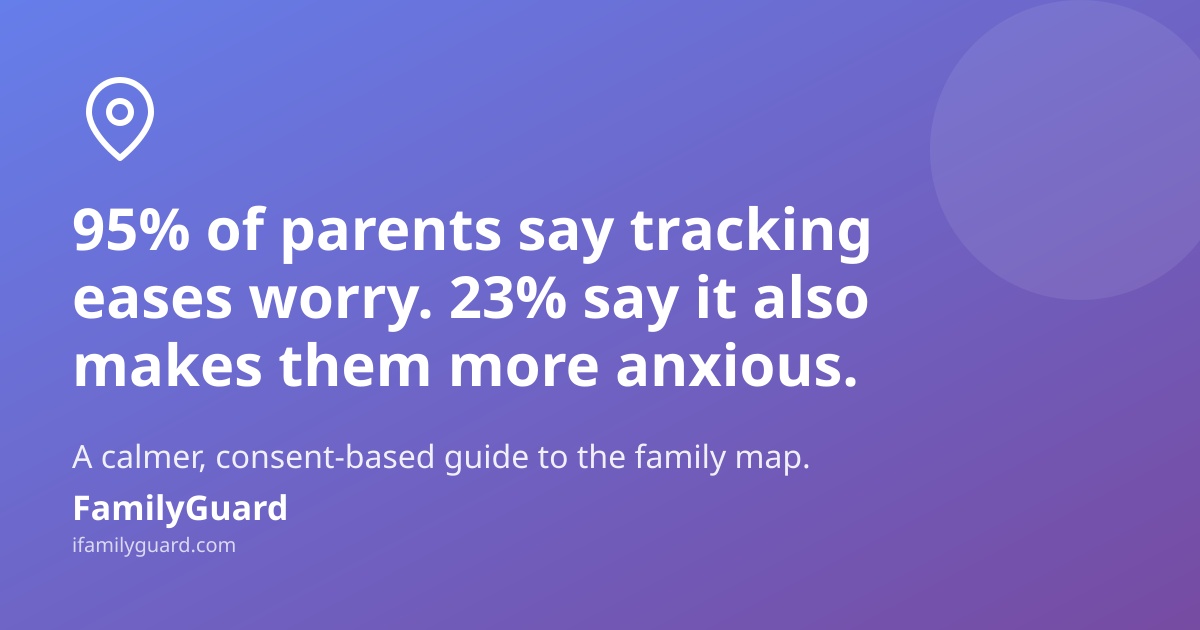
A 2026 national poll from the University of Michigan's C.S. Mott Children's Hospital found something similar in families of young adults: 95% of parents who track a child's location said it helps them worry less, yet nearly a quarter, 23%, admitted it sometimes makes them more anxious than reassured. Both things can be true at once. (C.S. Mott Children's Hospital National Poll on Children's Health, 2026)
That's the heart of it: checking the map gives a small hit of relief, so it's tempting to check again. But relief that depends on constant checking tends to fade fast and demand more checking to get it back.
What the Map Is Good For, and What It Isn't
Location sharing works best as a background layer of connection, not a live feed to monitor. It's there so you can confirm someone arrived safely, coordinate a pickup, or get help fast in an actual emergency. It isn't meant to replace a conversation, predict a mood, or answer questions a quick text could answer better.
This distinction matters just as much to your kids as it does to you. The same Mott poll found that only 54% of tracking parents had given their young adult child the option not to be tracked, and non-tracking parents were far more likely to see tracking as an invasion of privacy (65%) than parents who actually tracked their child (16%). Keeping location sharing consent-based and openly discussed, rather than a silent habit, is what keeps it feeling like togetherness instead of surveillance. (C.S. Mott Children's Hospital National Poll on Children's Health, 2026)
Signs You Might Be Over-Checking
A quick, honest self-check can help. None of these are a crisis, just useful signals:
- You open the map out of boredom or stress, not because something prompted it.
- A normal, explainable gap, like a bus running late, sends your mind straight to worst-case scenarios.
- You've checked the same location more than once in a short span without a specific reason.
- Your child has mentioned feeling watched rather than supported.
- Checking the map doesn't actually make you feel calmer anymore, it just becomes the next thing you do.
If a few of these sound familiar, it's less a sign you care too much and more a sign the habit has outgrown its original purpose.
Building Calmer Habits Around the Map
The goal isn't to stop using location sharing. It's to let it do its job quietly, in the background, so it can actually bring the peace of mind it promised. A few shifts help:
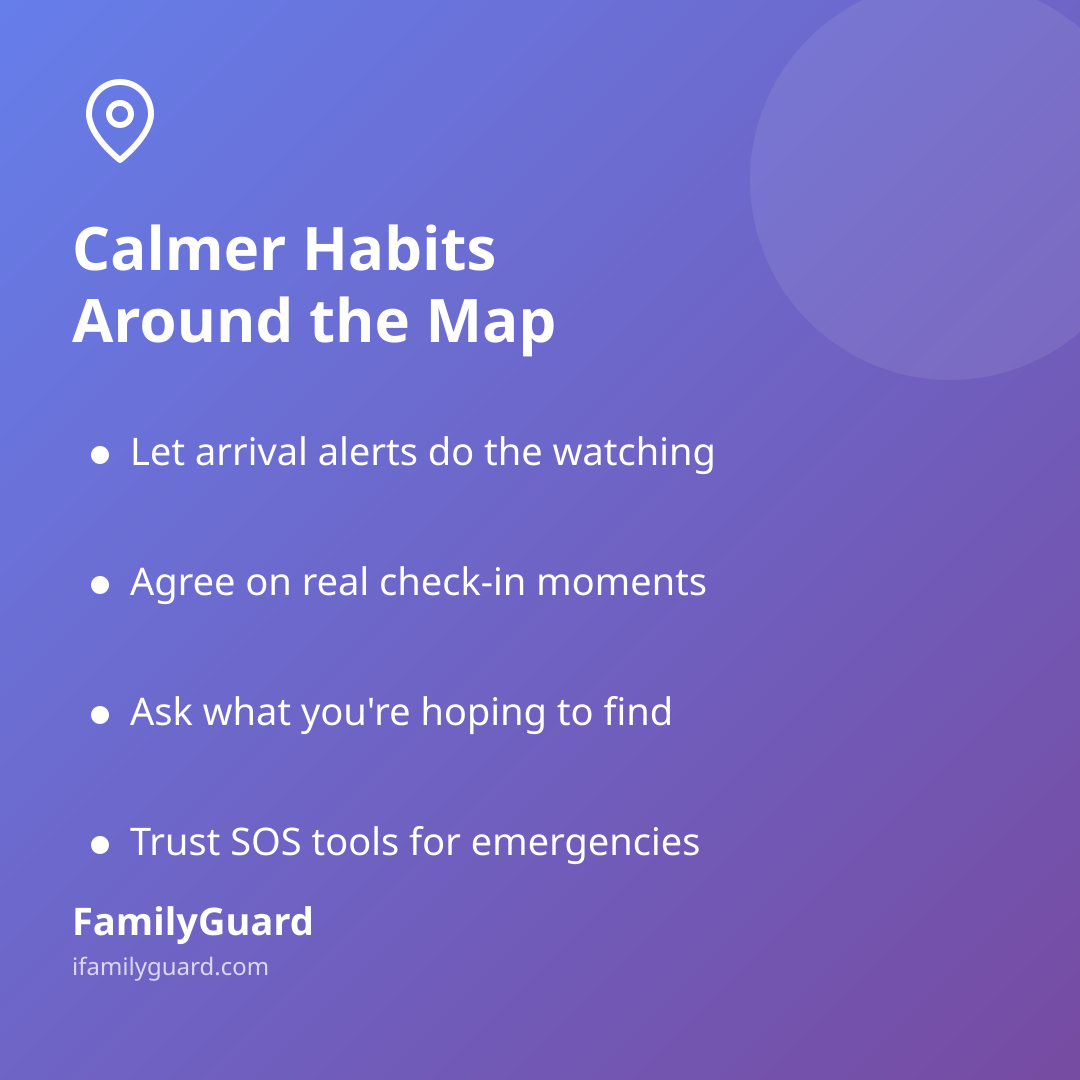
- Let arrival alerts do the watching. Instead of pulling up the map to confirm someone got to school or a friend's house, set up a smart zone that notifies you automatically when they arrive or leave. You find out the moment it matters, without needing to check anything yourself.
- Agree on real check-in moments. Decide together on a few natural touchpoints, like after school or before bed, rather than treating every hour as a checkpoint.
- Separate "worried" from "informed." Before opening the map, ask what you're actually hoping to find. If the honest answer is "nothing new," that's a cue to put the phone down instead.
- Save the map for logistics, not for monitoring mood. It can tell you where someone is; it can't tell you how they're feeling. A text does that better.
- Trust the emergency tools to work when needed. A one-tap SOS feature means your child can reach you instantly if something is genuinely wrong, so you don't have to pre-empt every possibility by watching constantly.
Apps like FamilyGuard are built around this idea: smart zones and SOS alerts exist precisely so families don't have to keep the map open all day to feel connected.
Talking It Through With Your Kids
A short, honest conversation goes a long way. Tell your child what you're hoping to change, not just about your own habits, but about how you use location sharing together. Ask them how often they'd like you to check in, and what would make the arrangement feel fair to both of you. Older kids and teens, in particular, respond well to being part of that decision rather than having it handed down.
This conversation also models something valuable: that location sharing is a tool both sides agreed to, revisited and adjusted as trust grows, not a rule that was set once and never questioned.
A Calmer Kind of Connected
Location sharing was never meant to erase every worry a parent has, no app can do that. What it can do is quietly confirm the ordinary, boring facts that let you relax: they got there, they're on their way, they're fine. The less you need to go looking for that reassurance, the more it tends to show up on its own.