There's a particular kind of nervous excitement that comes with the words "Can I go to the concert with my friends? No parents." It's a milestone moment — your teen is asking for a slice of independence in a loud, crowded, unfamiliar place, and they want you to trust them with it. The good news is that with a little planning, this can be a genuinely fun rite of passage rather than a source of dread for either of you.
Concerts and festivals are different from a lot of the other places teens go alone. The crowds are dense, phone signal can be unreliable, and the night often runs later than a typical outing. None of that means you should say no — it just means the conversation beforehand matters more than usual.
Start With Why They Want to Go, Not Just the Rules
Before you jump to logistics, ask your teen what the night looks like to them: who they're going with, how they're getting there and back, and what time they expect to be home. Listening first — instead of leading with a list of restrictions — makes the safety conversation feel like planning together rather than a permission test they might fail.
It also gives you useful information. A young teen going to an all-ages daytime show with two responsible friends is a different situation than an older teen heading to a late-night festival with people you've never met. The plan should match the actual event, not a generic worst-case scenario.
Build the Plan Together
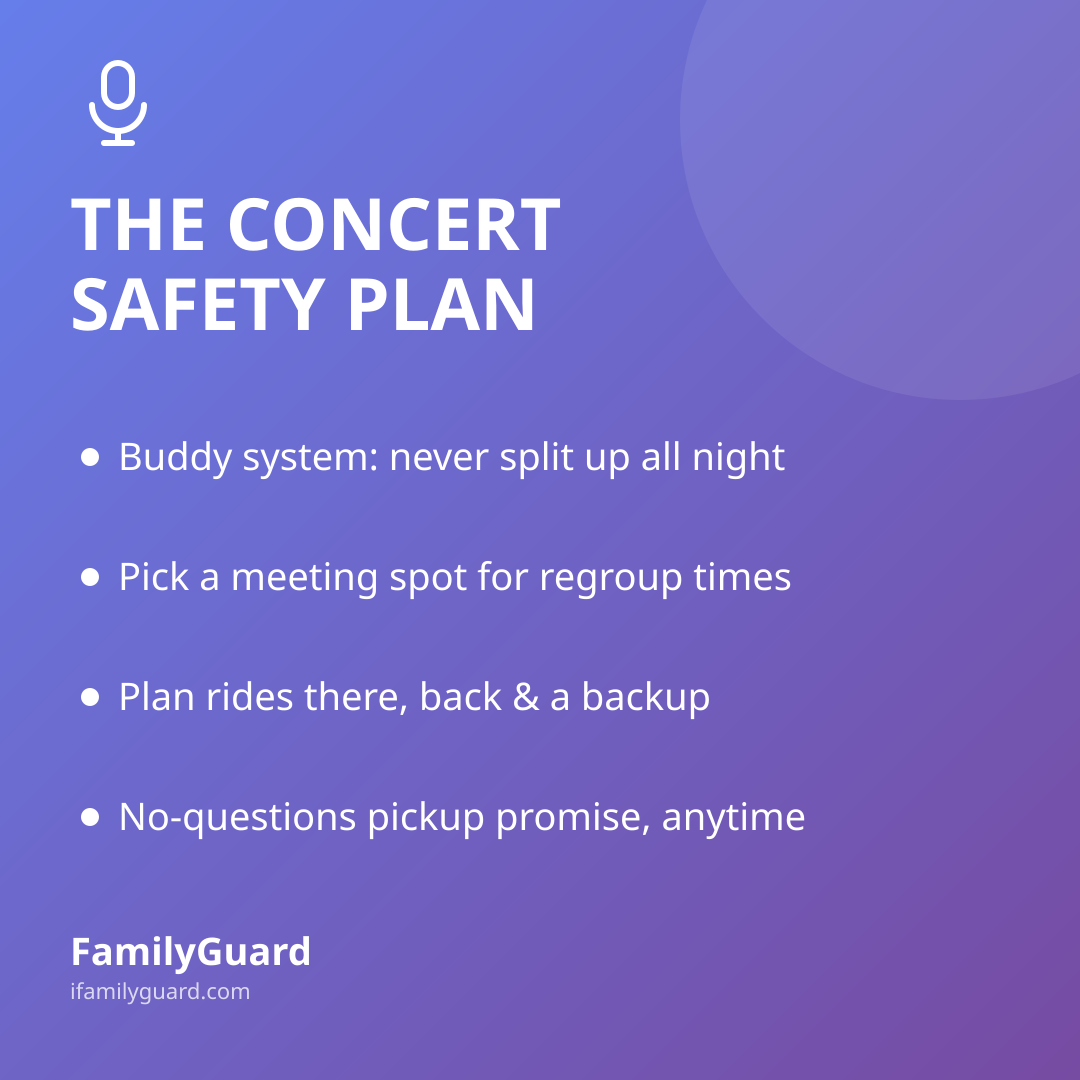
A few concrete agreements, decided calmly in advance, do more for everyone's peace of mind than any amount of worrying. Consider covering:
- The buddy system. Nobody goes alone, and nobody leaves the venue alone — even to find a bathroom or get food. Groups that arrive together should plan to leave together.
- A meeting spot. Pick a specific, easy-to-describe landmark inside or just outside the venue where the group will regroup if phones die or the crowd separates them, and set a few check-in times throughout the night rather than waiting until it's over.
- Transportation, both ways. Agree on exactly how they're getting there and, just as important, how they're getting home — including a backup plan if that ride falls through.
- A check-in rhythm. A quick text or a location ping at agreed moments — arrival, intermission, when they're leaving — is far less intrusive than a string of "are you okay?" calls, and it keeps you both informed without anyone hovering.
- A no-questions-asked pickup offer. Make it genuinely safe for your teen to call you at 1 a.m. if plans fall apart, without fear of a lecture on the spot. That promise is what actually gets used in a pinch.
The nonprofit RAINN, which focuses on personal safety, recommends exactly this kind of pre-planning for shows and festivals: choosing a specific meeting place and time to reconnect if the group gets separated, and scheduling mini check-ins throughout the day so nobody is left alone in a crowd for hours. Their guidance also notes something worth repeating to teens directly — with so many phones competing for signal in a packed venue, texts and calls may not go through right away, so a physical meeting plan matters even more than a digital one (RAINN — 4 Tips To Stay Safer at Shows, Concerts, Raves, and Festivals).
Staying Connected Without Hovering
Nearly all teens now carry a smartphone — 95% of 13-to-17-year-olds in the U.S. have or have access to one, according to a 2024 Pew Research Center survey — so the phone itself isn't usually the obstacle; it's agreeing on how it gets used that night (Pew Research Center — Teens, Social Media and Technology 2024).
This is where a light-touch, consent-based approach works better than constant calling or texting. Many families find it easier to agree on sharing location for the evening — openly, with both sides knowing it's on — rather than relying on sporadic replies in a loud venue. An app like FamilyGuard, which shares location only within the family and only with everyone's knowledge, can quietly cover the "where are you, are you okay" question without either of you needing to type it out mid-show. The one-tap SOS feature is also worth showing your teen ahead of time, so they know exactly how to reach you fast if something feels off — not because you expect trouble, but because knowing the tool is there makes it easier to ask for help without hesitation.
If Something Feels Off
Talk through this scenario calmly, well before the night of the show: what should they do if they get separated from friends, feel unsafe, or simply want to leave early? Encourage them to trust that instinct immediately rather than talking themselves out of it. Practical steps worth agreeing on together include finding venue staff or security, heading to the pre-agreed meeting spot, and calling you — with the understanding that you'll come get them, no questions asked, at any hour.
It's also worth a brief, matter-of-fact conversation about peer pressure around alcohol and other substances at these events, without turning it into a lecture. A short, honest exchange — "if you ever feel pressured, you can blame me and say your parent is picking you up in ten minutes" — gives teens an easy out that doesn't cost them social standing.
Afterward: Let It Build Trust, Not Just Relief
When the night goes well, say so. A quick "thanks for checking in, glad you had fun" does more for future independence than silence. Each smooth outing is evidence — for both of you — that the plan works, which makes the next conversation about a later curfew or a bigger festival easier to have.
Concerts and festivals are memories your teen will keep for a long time. A calm, collaborative safety plan doesn't get in the way of that — it's what makes it possible to say yes.