
For some families, "keep an eye on them" takes on an extra layer of meaning. A child who tends to wander off — whether because of autism, ADHD, a developmental difference, or simply a very curious temperament — can turn a quiet moment at a birthday party or a backyard barbecue into a heart-pounding search. If this sounds familiar, you are far from alone, and there is a lot you can do to make these moments less frequent and less frightening.
This isn't about blame or constant vigilance until you're exhausted. It's about building a few steady habits and tools so that if your child does slip away, your family is ready — and so everyone around you, from neighbors to teachers, is part of the safety net.
Why This Deserves Its Own Plan
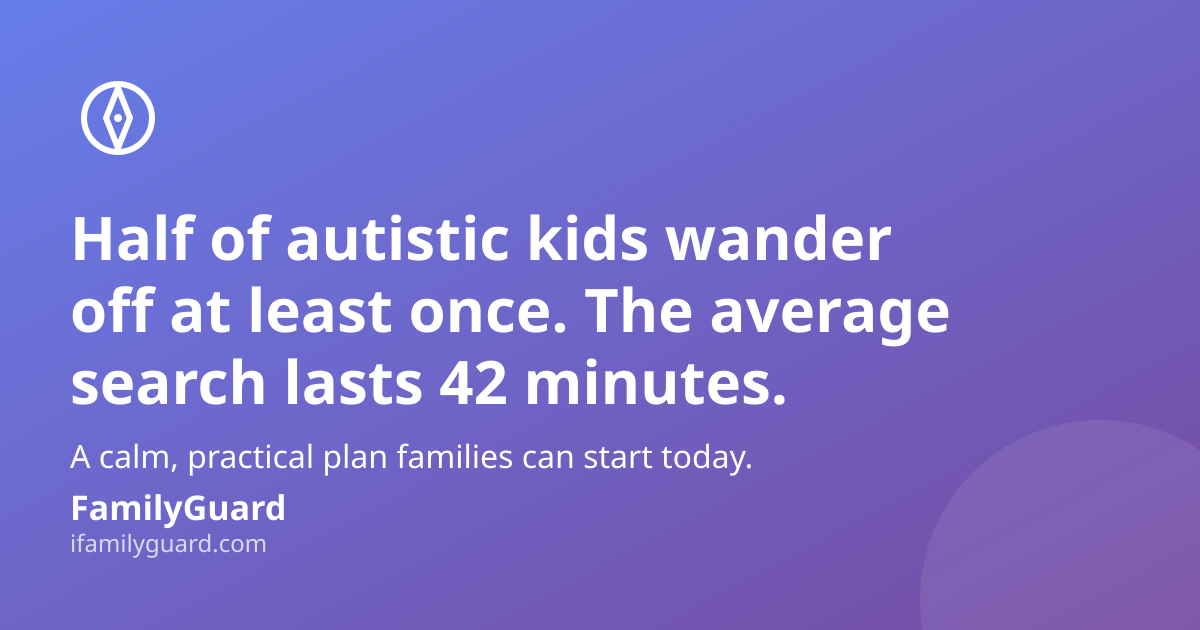
Wandering, sometimes called "elopement" in clinical terms, is more common than many parents realize. A study from the Interactive Autism Network at the Kennedy Krieger Institute, published in Pediatrics, followed more than 1,200 children with autism spectrum disorder and found that 49% had attempted to wander or bolt from a safe, supervised place at least once after age four — roughly four times the rate of their siblings without autism. Of those who wandered, 53% went missing long enough to cause real concern, with children away for an average of about 42 minutes (Kennedy Krieger Institute, 2012).
Those numbers aren't meant to alarm you — they're meant to validate something many parents already feel in their gut: this is a real, documented pattern, not a personal failing. Naming it clearly is the first step toward preparing for it calmly.
Securing the Everyday Spaces
Most wandering starts at home, often during an ordinary moment — while a parent is in the shower, cooking dinner, or helping a sibling with homework. A few adjustments to your space can buy precious extra seconds or stop an exit altogether:
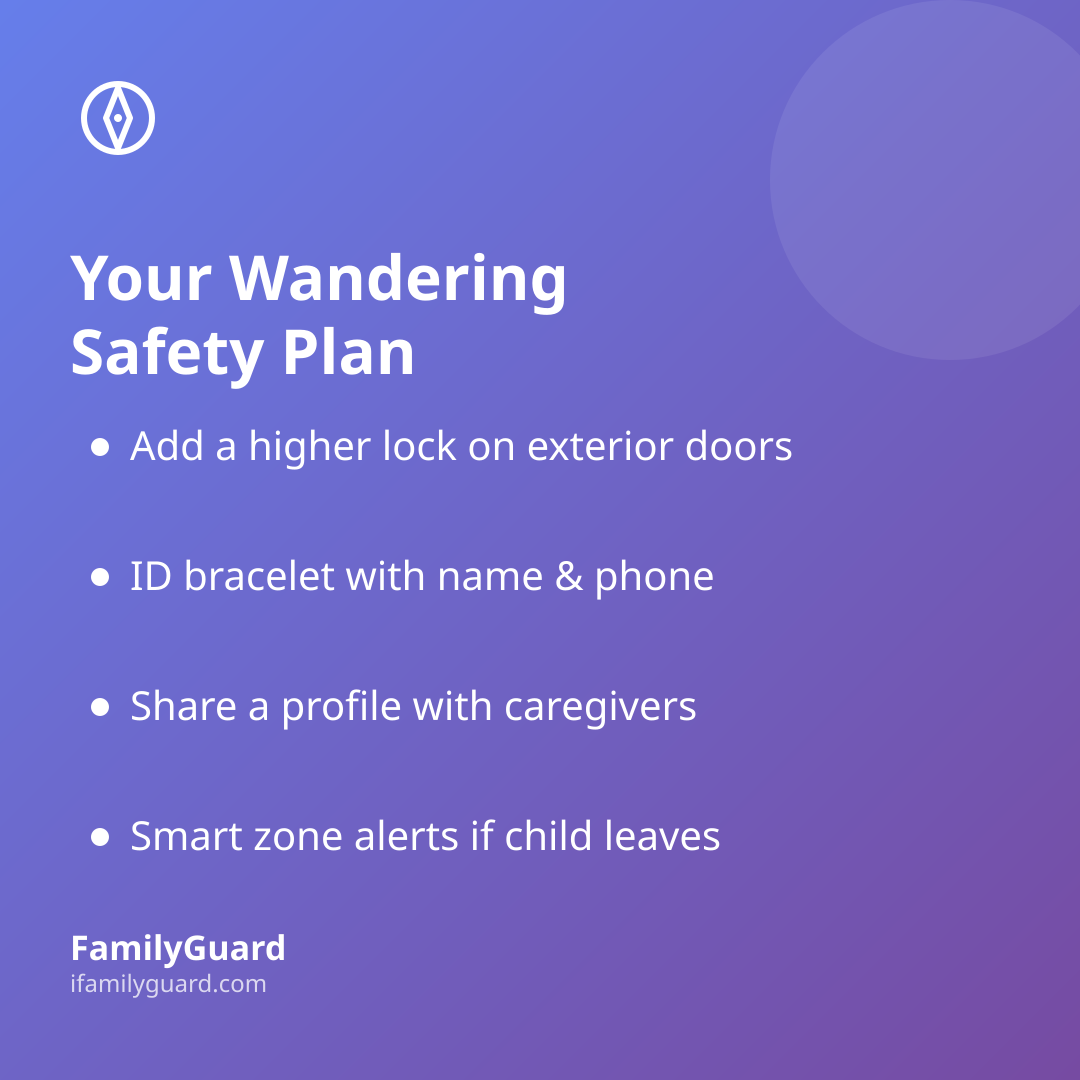
- Add a second lock or deadbolt higher up on exterior doors, out of easy reach.
- Use a door or window chime that alerts you the moment an exit opens.
- Consider a fence with a locking gate around the yard or pool area.
- Keep a recent, close-up photo of your child easily accessible on your phone — ideally updated every few months, since appearance changes quickly.
- If your child is drawn to water, prioritize swim lessons; many community pools and YMCAs offer adapted classes for kids with different needs.
None of this needs to feel like a lockdown. The goal is simply to add a beat of time and a signal — enough for you to notice and respond before a small moment becomes a search.
Building the Information Your Family Might Need in a Hurry
If your child does go missing, even briefly, the first few minutes matter most. Having information ready ahead of time — rather than scrambling to remember it under stress — makes those minutes count.
- An ID bracelet, necklace, or even a temporary tattoo with your child's name and a parent's phone number, including a note if your child is nonverbal.
- A short written profile — favorite places your child might head toward, what calms them, and how they respond to their name being called — shared with babysitters, grandparents, and teachers.
- A quick conversation with close neighbors, introducing your child and leaving a photo, so they know who to look out for.
- A heads-up to your child's school about wandering risk, so playground supervision and dismissal routines account for it.
Some police departments also offer voluntary registries or tracking programs for families managing wandering risk — it's worth a quick call to your local department to ask what's available in your area.
Where Location Tools Fit In — Gently
For many families, a location-sharing tool becomes part of this plan, not as a replacement for supervision, but as an extra layer of reassurance. The idea is the same one that works for any family: transparency within the household, not secret tracking. Even when a child doesn't fully understand the technology, families can still explain it in simple, consistent terms — "this helps us find each other if we get separated" — and treat the device as something worn openly, the same way a bike helmet or a name tag is worn openly.
This is where a tool like FamilyGuard can genuinely help: setting a smart zone around your home, school, or a relative's house means you get a gentle alert if your child leaves that area unexpectedly, and a one-tap SOS feature gives an older or verbal child a simple way to signal for help if they realize they're lost. These features work best as one part of a layered plan — alongside secured doors, ID information, and a network of people who know your child — rather than as a stand-alone fix.
Keeping the Circle Informed, Without Overexplaining
You don't owe anyone a detailed explanation of your child's needs. But a short, practical heads-up to the people in your child's daily life — a coach, a Sunday school teacher, a next-door neighbor — can make the difference between someone noticing right away and someone assuming your child is simply playing nearby. A simple line works well: "If you ever see [child's name] alone outside, please call me right away — here's my number." Most people are glad to help and will appreciate knowing exactly what to do.
A Calmer Way Forward
Preparing for wandering doesn't mean expecting the worst every day. It means trading a background hum of worry for a concrete plan — one that lives in your door locks, your child's ID bracelet, your neighbors' phone numbers, and maybe a smart zone alert on your phone. Most families who build this kind of safety net find that it doesn't just protect against a worst-case scenario; it also quiets the everyday anxiety, freeing up energy for the parts of parenting that are actually fun.
You know your child better than any checklist ever could. Use these ideas as a starting point, adapt them to what fits your family, and loop in your child's pediatrician or care team for guidance specific to their needs.