Three-fifteen hits and suddenly it's a relay race: one kid needs to be at soccer, another at a friend's house for a group project, and someone forgot their cleats at home. If the after-school hours feel like the most chaotic part of your family's day, you're not imagining it. This stretch of the afternoon involves more moving pieces — and more people responsible for them — than almost any other part of family life.
The good news is that a little bit of structure goes a long way. You don't need a perfect system, just one that everyone in the family understands and trusts. Here's how to build one that keeps kids safe, keeps parents sane, and keeps the whole family on the same page.
Why the After-School Shuffle Deserves Its Own Plan
Activities are genuinely good for kids. They build friendships, confidence, and skills that carry into adulthood. But logistics can quietly become the most stressful part of the arrangement, especially when multiple children, multiple drivers, and multiple locations are involved in the same afternoon.
It's worth pausing occasionally to ask whether the schedule is working for your family, not just filling it. The Child Mind Institute notes that there's no magic number of activities that's right for every child — instead, a helpful gut check is whether your child can still get enough sleep, keep up with homework, spend time with family and friends, and have some unstructured time to themselves. If the answer is consistently no, it may be time to simplify rather than add another practice or lesson to the mix (Child Mind Institute, 2026).
Build a Weekly Map Everyone Can See
Most after-school confusion comes down to one thing: information living in one person's head instead of somewhere the whole family can check. A shared weekly view fixes this fast.
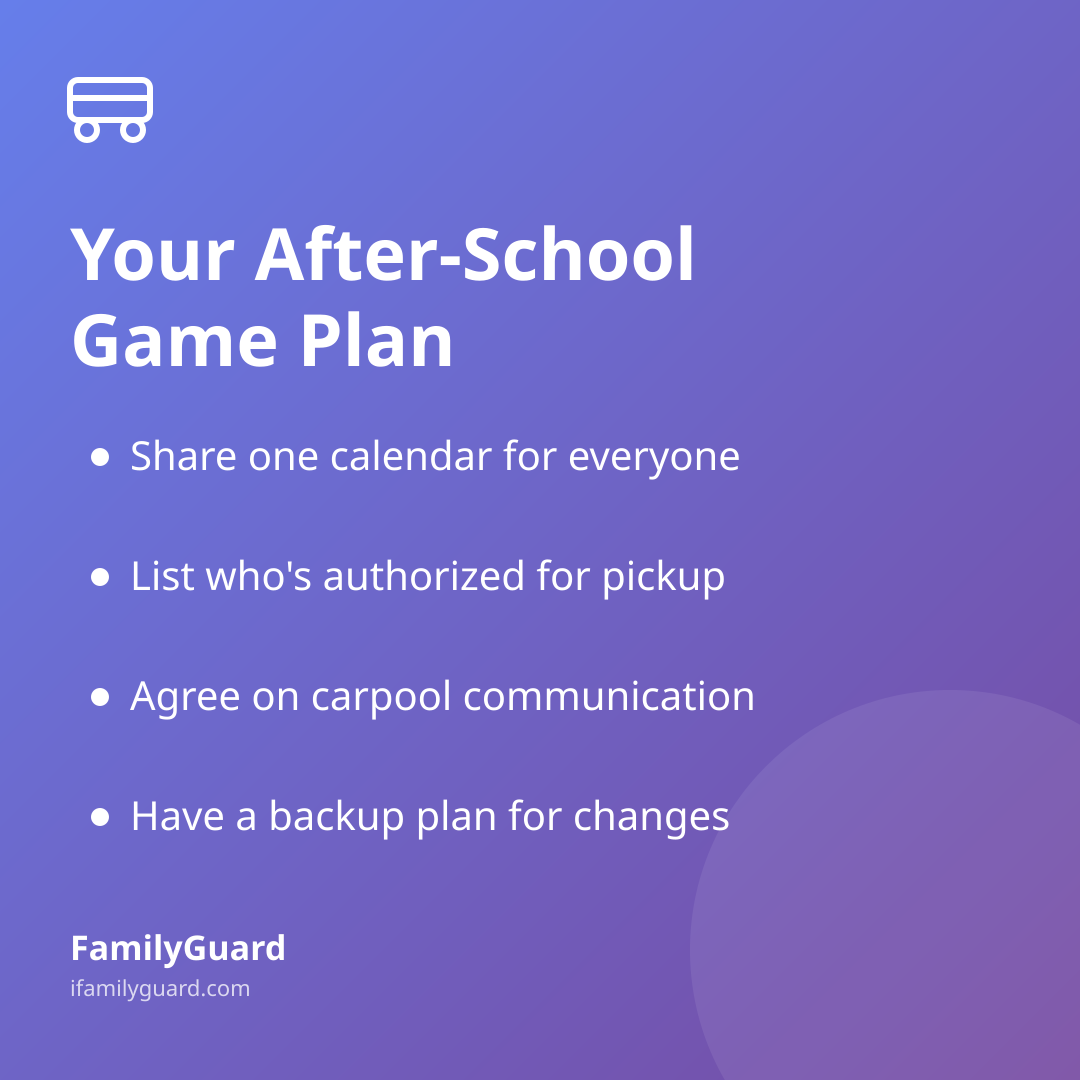
- One shared calendar for practices, lessons, and pickups — color-coded by child if that helps at a glance.
- A default pickup person for each activity, plus a backup, written down so nobody assumes "someone else has it."
- A standing family check-in, even five minutes on Sunday night, to walk through the week ahead together.
Older kids can help maintain this map themselves, which builds ownership over their own schedule. A family chat that the whole household actually checks makes it easy to flag last-minute changes — "practice moved to the gym" or "coach says pickup is 15 minutes early" — without a chain of missed texts. Some families use tools like FamilyGuard's shared chat and location alerts for this: a quiet notification that lets a parent know a child has arrived at practice or left the school building, so nobody has to send a "did you get there okay?" text mid-meeting.
Carpool and Pickup Basics Worth Repeating
If your family shares driving duties with other parents, a few ground rules make the arrangement smoother and safer for everyone.
- Keep a written list of who is authorized to pick up each child, and share it with coaches, teachers, or activity leaders.
- Agree on a communication method for the carpool group — a group chat works well — so schedule changes reach everyone at once.
- Review basic pickup-line etiquette with kids: wait in the designated area, don't dart between cars, and only get into a vehicle after confirming with the driver.
- Remember the core road-safety rules that don't change with age: children 12 and under should ride buckled in the back seat, and drivers should always stop for a school bus with its red lights flashing and stop arm extended, according to the National Highway Traffic Safety Administration (NHTSA, 2024).
These basics can feel obvious, but a quick refresh each fall — especially with new drivers joining a carpool rotation — keeps everyone aligned instead of assuming.
When Plans Change Mid-Afternoon
Even the best schedule gets disrupted: practice runs long, a ride falls through, or a child feels sick partway through an activity. What matters isn't preventing every hiccup, it's having an agreed-upon way to handle it.
Talk through a few simple scenarios in advance so nobody has to improvise under pressure:
- Who does my child call or message first if a ride doesn't show up?
- What's the plan if two activities end at the same time in different places?
- Is there a trusted neighbor or family friend who can help in a pinch?
A simple check-in habit — a quick "here" message on arrival and "leaving now" on departure — takes the guesswork out of the afternoon without feeling like a leash. For families who prefer not to rely on texting back and forth, location sharing can quietly fill that gap: everyone involved can see that a child has safely arrived, with the family's knowledge and consent, rather than parents having to ask.
Keeping the System Sustainable
A good after-school system should reduce stress, not add another thing to manage. If the calendar, the group chat, and the pickup list are starting to feel like a second job, that's a signal worth listening to.
Build in room for the plan to flex: a slower season with fewer activities, a standing family dinner that nothing gets scheduled over, or an honest conversation with your kids about which activities they still genuinely want to do. The goal isn't a flawless spreadsheet — it's an afternoon where everyone knows the plan, trusts it, and still has time to just be a family.