
The email lands in your inbox: the team is heading to a weekend tournament three hours away, staying overnight at a hotel, and your child will be traveling without you. It's exciting news — a milestone, even — but it also raises a quiet list of questions. Who's supervising the hotel hallway at night? What happens if the bus is delayed? How will you know your child made it to the gym safely?
Overnight sports travel is becoming a normal part of childhood for many families, whether it's a soccer tournament, a swim meet, a band competition, or a wrestling invitational. The good news is that most of these trips are well organized by coaches and leagues who have done this many times before. Your job isn't to take over their planning — it's to build a small, calm layer of communication between you and your child so everyone feels prepared, not anxious.
Start With the Team's Own Policies
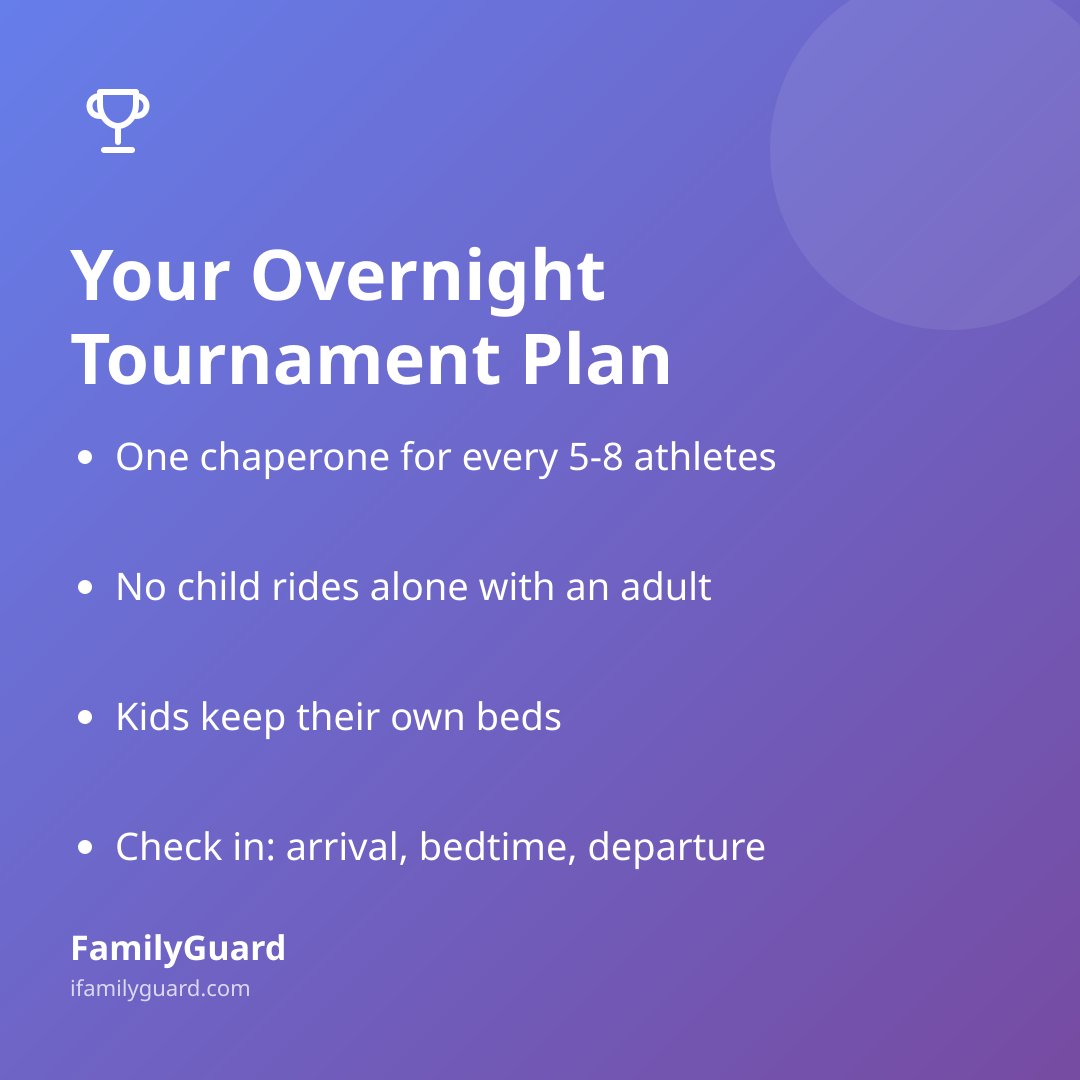
Before you build your own plan, find out what the team or league already has in place. Most reputable youth sports organizations have written travel policies covering supervision ratios, lodging arrangements, and communication expectations. The U.S. Center for SafeSport recommends assigning one chaperone for every five to eight athletes, making sure no child ever rides alone with a single adult, and having athletes keep their own beds rather than sharing a room with an adult. If you don't already have this information, it's reasonable to ask the coach or team manager for:
- The chaperone-to-athlete ratio and who is supervising overnight
- The hotel name, room assignments, and roommate pairings
- A daily schedule, including departure and return times
- Who to contact directly if you can't reach your child, and a backup contact
- Whether coaches or chaperones have completed background checks or safety training
Asking these questions isn't a sign of distrust in the program — most coaches expect and welcome them. It simply gives you the information you need to fill in the gaps with your own family's plan.
Agree on a Simple Check-In Rhythm
You don't need your child texting you every hour, and honestly, they won't want to. A better approach is agreeing on a few natural check-in points tied to the day's schedule rather than the clock: when they arrive at the hotel, before lights-out, and after the final game or performance. This keeps communication predictable without making your child feel like they're being monitored between every drill and meal.
If your family already uses a shared setup like FamilyGuard for everyday location sharing and check-ins, a team trip is a good moment to talk through how it fits this specific situation — for example, agreeing that your child will keep their location on for the weekend and share a quick "arrived safely" message rather than fielding calls during practice. Keeping it consent-based and tied to the trip's rhythm, rather than constant, is what makes it sustainable and something your child is willing to keep up.
A Few Check-In Anchors That Work Well
- Arrival at the hotel or venue
- Before bed each night
- Any schedule change (a delayed bus, an extra game added)
- Before departing for the trip home
Build a Short, Written Emergency Card
The Federal Emergency Management Agency's family emergency communication planning guidance recommends that every household document key contacts and meeting points in advance rather than trying to remember them under stress. For a team trip, a version of this can be as simple as a note in your child's bag or phone with:
- The head coach's and lead chaperone's phone numbers
- The hotel name, address, and your child's room number
- A backup family contact in case you're unreachable
- Any medical information the coach may not have on hand, like allergies or medications
This isn't about expecting something to go wrong — it's the same logic as a fire drill. Having the information ready means nobody has to search for it in a stressful moment.
Talk Through the "What If" Scenarios Calmly
Before the trip, walk through a couple of simple scenarios together, framed matter-of-factly rather than as warnings. What should your child do if they feel unsafe or uncomfortable at the hotel? Who do they go to first — a chaperone, the coach, or another trusted adult on the trip? What's the plan if their phone dies or they lose signal?
For younger or first-time travelers, it can help to agree on a one-tap way to reach you if something feels off, even if it's minor — a strange roommate situation, feeling sick, or just homesickness. Knowing they have an easy way to reach you, without needing to explain everything in the moment, often prevents small worries from growing into bigger ones.
The goal isn't to prepare your child for disaster — it's to remove hesitation. A kid who already knows who to call and what to say will act faster and feel calmer than one who's never thought about it.
Trust the Trip, Support the Transition
For many kids, an overnight tournament is their first taste of being responsible for their own bag, their own bedtime, and their own choices away from a parent's direct supervision. That's a genuinely good thing. Your role is to make sure the safety net is there without hovering over it — a quick check-in text, a shared understanding of the schedule, and clear contacts if something comes up.
Most of these trips go exactly as planned: a few games, a hotel pool, a lot of team bonding, and a tired kid asleep on the ride home. Building a light communication plan in advance means that if anything does come up, everyone already knows what to do — and if nothing does, your child simply gets to enjoy the trip a little more independently, with you cheering from a distance.