Hosting a sleepover at your own house is one kind of milestone. Sending your child off to spend the night at someone else's house is a different one entirely. You're not the one checking the smoke alarms or deciding when the lights go out — you're trusting another family to do that, often for the first time. That mix of excitement and nerves is completely normal, and a little preparation goes a long way toward making it feel good for everyone.
The goal isn't to interrogate the host family or wrap your child in rules they'll resent. It's to build a shared, calm plan — one your child is part of, not one done to them.
Start With a Conversation, Not an Interrogation
Before the night of the sleepover, it helps to talk with the host parent directly rather than relying only on a group chat message or a note passed through your kids. A short phone call or a few minutes at drop-off is usually enough. Darkness to Light, a national nonprofit focused on preventing child sexual abuse through adult education, publishes a Safe Sleepover Checklist (2022) that suggests asking the host family about adult supervision, who else will be present, and the household's general rules. A few good, friendly questions drawn from that checklist:
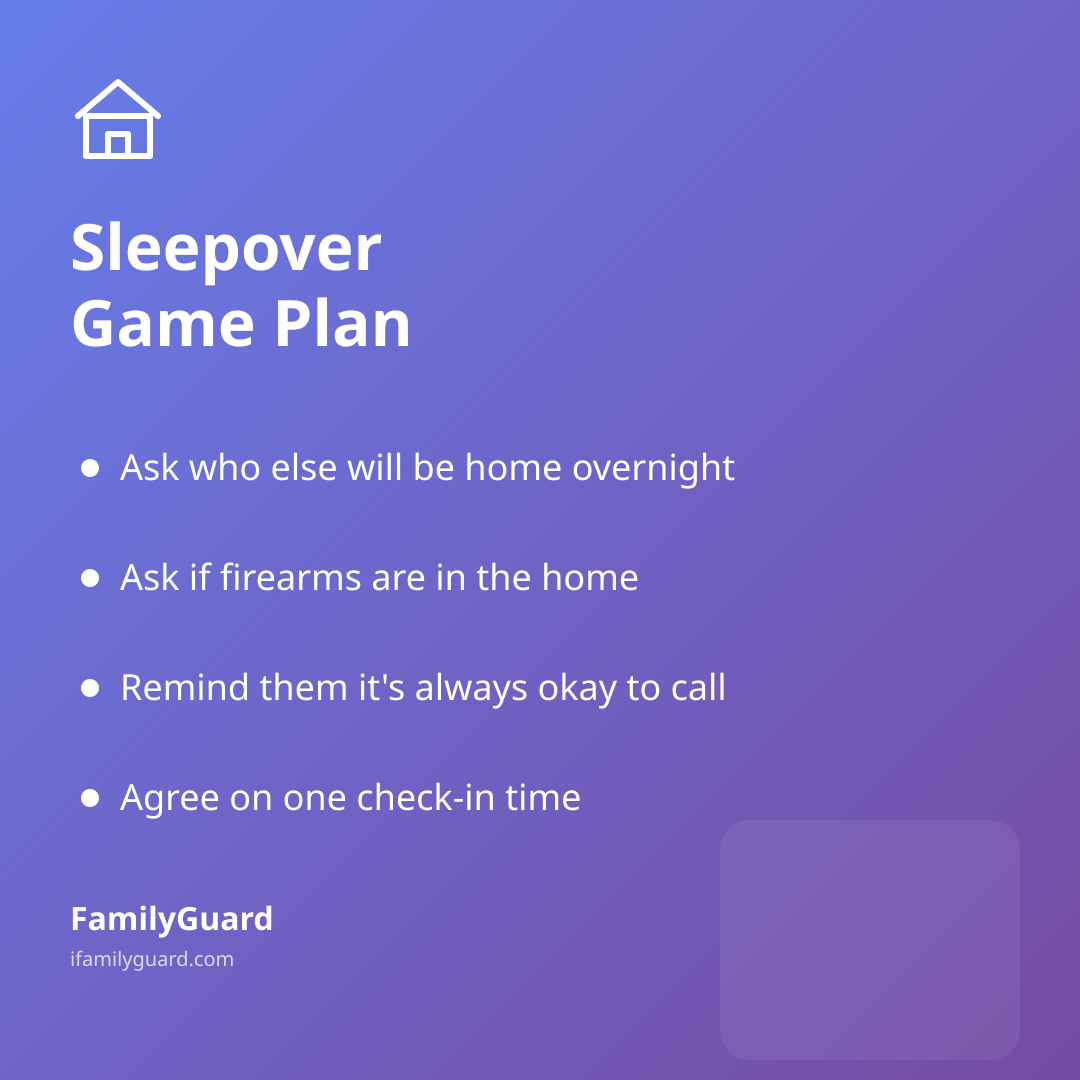
- Who else will be in the home overnight, including older siblings or other guests?
- Will an adult be present and awake for most of the evening?
- What are the house rules around screens, movies, and bedtime?
- Is there anything you'd like to know about my child — allergies, anxieties, or comfort routines?
It's also worth asking directly whether there are firearms in the home and how they're stored. That question is the core message of ASK (Asking Saves Kids), a national public-health campaign run by Brady United in partnership with Everytown for Gun Safety, which encourages parents to raise it before any sleepover or playdate — it's a question many parents skip simply because no one reminded them it's okay to ask.
Most hosts appreciate being asked. If a question is met with defensiveness or you can't get a straight answer, that's useful information too — trust that instinct.
Prep Your Child, Gently
Kids who are excited about a sleepover don't always want to hear "safety talk," so keep it light and quick rather than turning it into a lecture. A few things worth covering together beforehand:
- Remind them it's always okay to call you, for any reason, at any hour — no judgment, no "but you were having fun."
- Walk through what to do if they feel uncomfortable, homesick, or unsure about something happening in the house.
- If your family already uses a code word for "please come get me" situations, this is a good night to remind them of it.
- Let them know what time you'll check in, so it doesn't feel like you're watching over their shoulder.
Framing this as "here's our plan" rather than "here's what could go wrong" keeps the conversation reassuring instead of scary.
Agree on How You'll Stay in Touch
One check-in text at a set time is often enough — you don't need a play-by-play of the evening. If your child already carries a phone and your family uses location sharing day to day, it's worth having a quick, honest conversation about whether it stays on for the sleepover too, and why. Keeping that choice consent-based, rather than assumed, matters just as much on a sleepover night as any other night.
Some families find it reassuring to set up a smart zone alert for the host's address in an app like FamilyGuard, so a quiet notification lets you know your child has arrived safely — without needing a text exchange at a busy drop-off. It's a small, low-friction way to close the loop on both ends without hovering over the evening.
Pack the Practical Stuff
A short checklist the night before saves a lot of stress:
- A charged phone or device, plus the charger, packed somewhere easy to find.
- Any medications, clearly labeled, with instructions written down for the host parent.
- A comfort item for younger kids — a favorite stuffed animal or blanket can make a new house feel less unfamiliar.
- Emergency contact numbers written on paper too, in case a phone dies or gets left in another room.
Let Trust Build, One Sleepover at a Time
The first time is usually the most nerve-wracking for parents — and it does get easier. Each successful sleepover gives you real information about how your child handles time away and how a particular host family runs their home, which makes the next invitation easier to say yes to with confidence. There's no need to get every detail perfect on the first try. A short conversation with the host, a quick chat with your child, and a simple way to check in cover most of what matters.