At some point, almost every parent faces the same quiet dilemma: should I look through my teen's phone? It's rarely about one dramatic moment. More often it's a nagging curiosity after a strange comment, a new app icon you don't recognize, or just the general unease of not knowing what's happening in a device your child carries everywhere. The good news is that this doesn't have to be a decision made in secret, or one that pits trust against safety. Done well, it's a conversation your teen is part of, not a search they discover after the fact.
You're Not the Only One Wondering
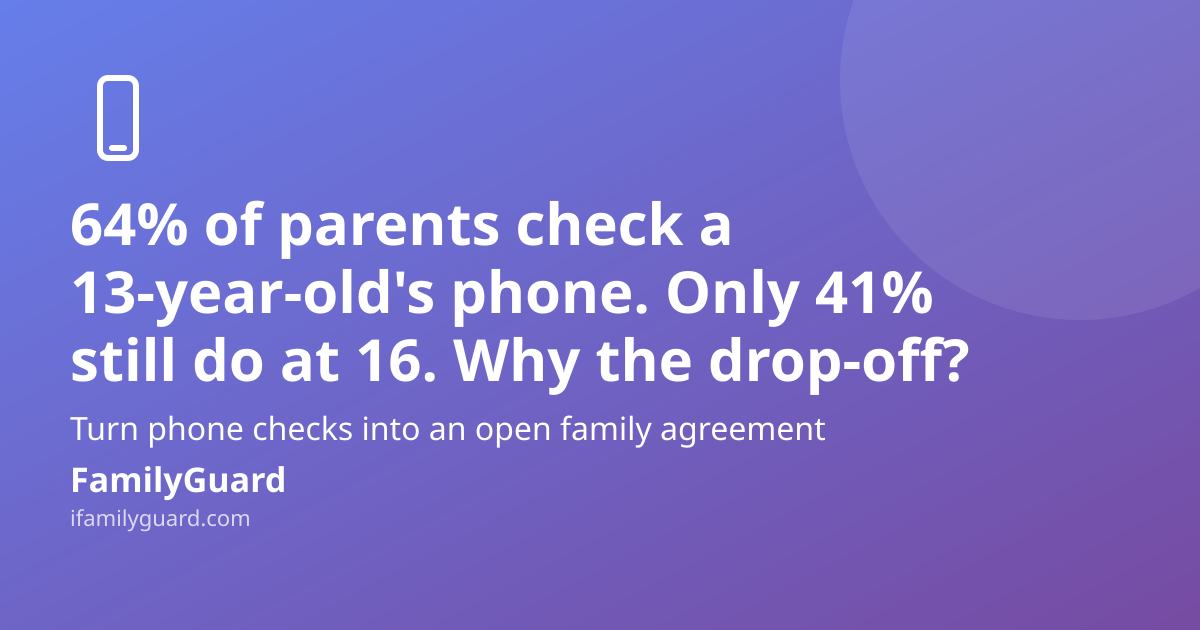
If you've gone back and forth on this, you're in good company. According to Pew Research Center (2024), about half of parents of teens say they look through their teen's phone, but that number shifts a lot with age. It's 64% among parents of 13- to 14-year-olds, dropping to 41% for parents of 15- to 17-year-olds. Teens' own sense of being monitored follows a similar pattern, though at slightly lower rates than parents report — a gap worth noticing, since it hints that not every check is happening out in the open.
That gap is really the heart of this issue. Checking a phone isn't the problem. Checking it in a way your teen doesn't know about, or wouldn't expect, is what tends to erode trust — and trust, once it's shaken, is hard to rebuild.
Set the Terms Before You Need Them
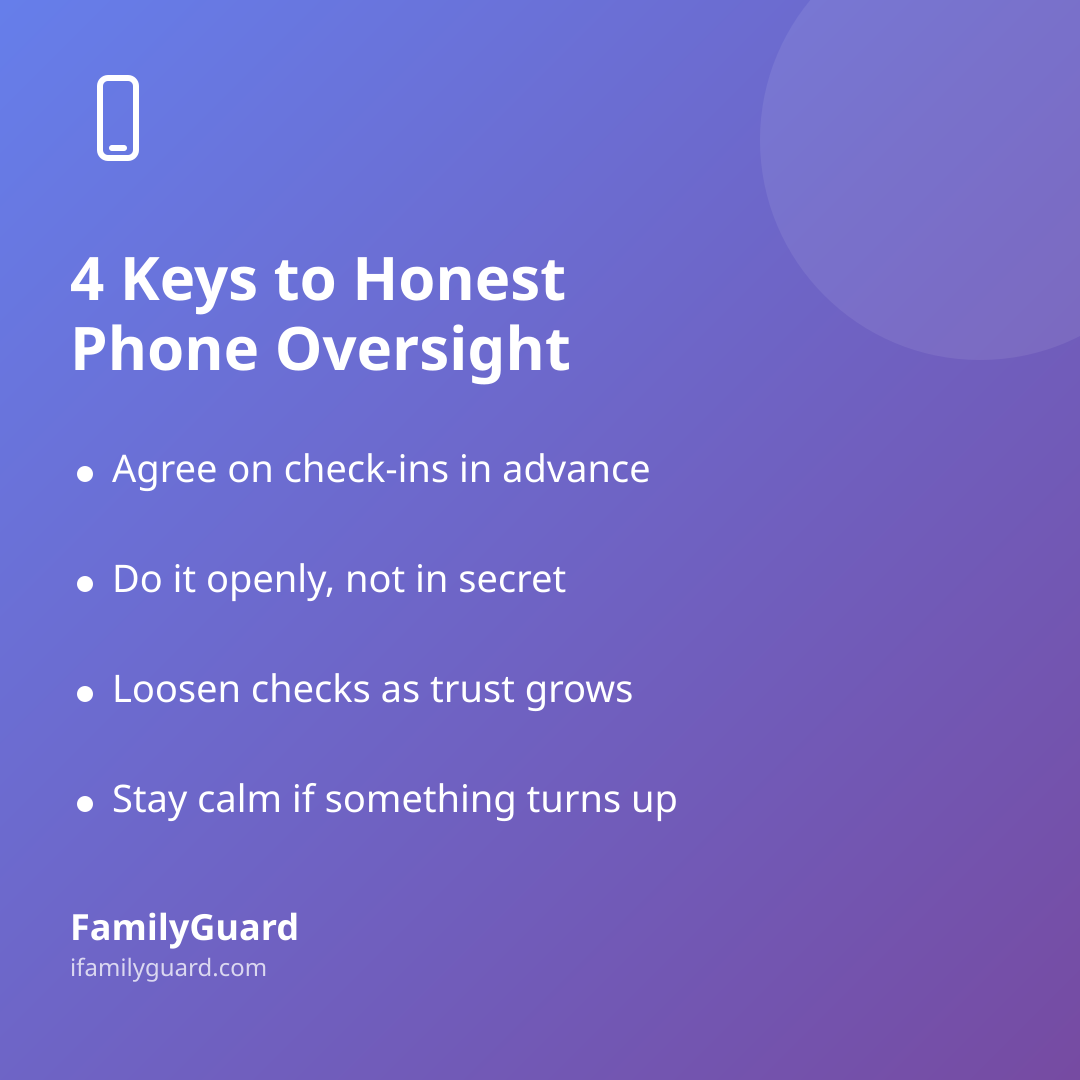
The easiest way to keep phone oversight from feeling like an ambush is to agree on it in advance, ideally when your child gets their first device rather than after something goes wrong. A short family conversation can cover:
- Whether check-ins will happen, and roughly how often (weekly glance, monthly deeper look, only if a concern comes up)
- Whether they'll be done together, side by side, or independently
- What you're looking for — new contacts, unfamiliar apps, signs of bullying or distress — versus what's off-limits, like reading private conversations line by line
- What happens if you find something concerning, so there are no surprise consequences
Writing this down as part of a broader family media agreement gives everyone something to point back to later, instead of relitigating the rules every time a disagreement comes up.
What Honest Oversight Can Look Like
Oversight doesn't have to mean scrolling through every message. For younger teens, many families start with the phone charging in a common area overnight, or a habit of sitting together for a few minutes to look at new apps or downloads. For older teens, this often shifts toward a lighter touch: asking about who they're talking to in a new group chat, or checking in on privacy settings together rather than reading the messages themselves.
This same principle — sharing information within the family, with everyone's knowledge, rather than monitoring in secret — is the idea behind consent-based tools like FamilyGuard, where location and status are visible to family members because everyone agreed to share them, not because someone is watching unnoticed. Applying that same openness to phone check-ins, whatever form they take, keeps the relationship intact even when the answer is "yes, I'm going to look."
Let Trust Do More of the Work as They Grow
The Pew numbers above make a useful case for something many parents sense intuitively: oversight that made sense for a 13-year-old often stops fitting a 16-year-old. As teens show they can navigate friendships, conflicts, and mistakes online with reasonable judgment, it's worth loosening the frequency and depth of checks and replacing some of it with conversation instead — asking what's going on in their online world rather than looking for yourself. This isn't about abandoning oversight altogether; it's about letting it evolve alongside your teen's demonstrated ability to handle more independence.
If Something Concerning Turns Up
If a phone check surfaces something that worries you — a troubling conversation, signs of bullying, contact from someone unfamiliar — try to resist reacting in the moment. A calm, curious conversation almost always gets you further than confrontation, and it keeps your teen willing to talk to you the next time something happens, rather than hiding it. If you're genuinely worried about your child's safety or wellbeing, it's reasonable to loop in a school counselor, pediatrician, or another trusted professional who can help you think through next steps.
The Real Goal
Phone oversight, at its best, isn't about catching your teen doing something wrong. It's about staying close enough to their digital life that if something does go wrong, they already know you're someone they can turn to. Whether you check often, rarely, or somewhere in between, doing it openly — with your teen's knowledge and a shared understanding of why — is what keeps it feeling like care instead of surveillance.